Showing posts with label History. Show all posts

Friday, August 30, 2013

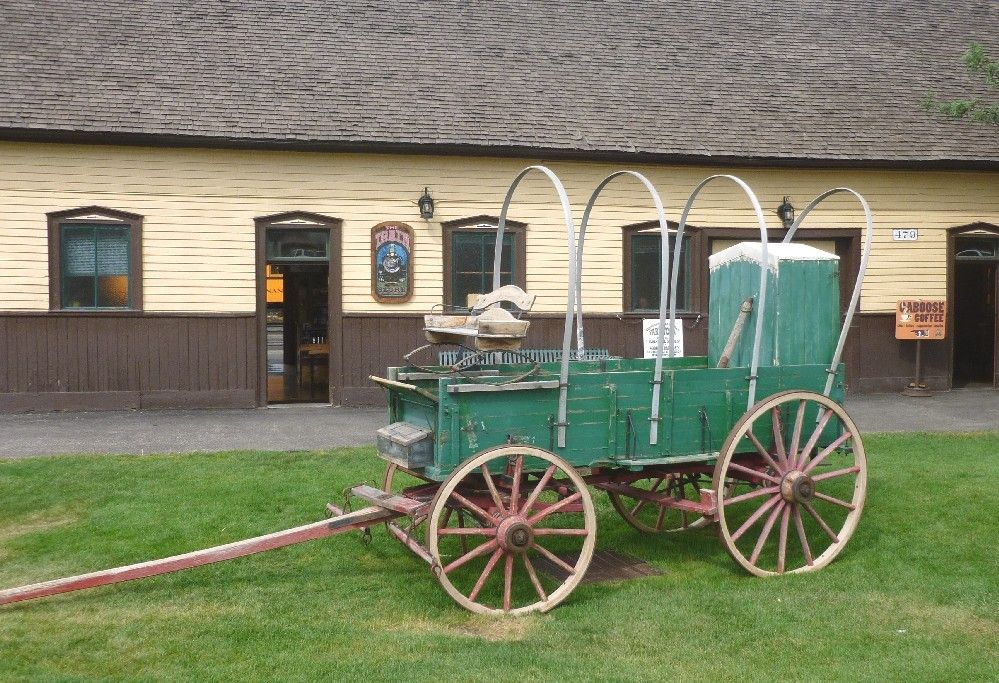
During the last full day of my recent vacation, I wandered around parts of Durango and then back to the railroad station, out of which I had ridden a Durango & Silverton train a few days earlier.  In front of the station is this covered wagon - but without the covering.

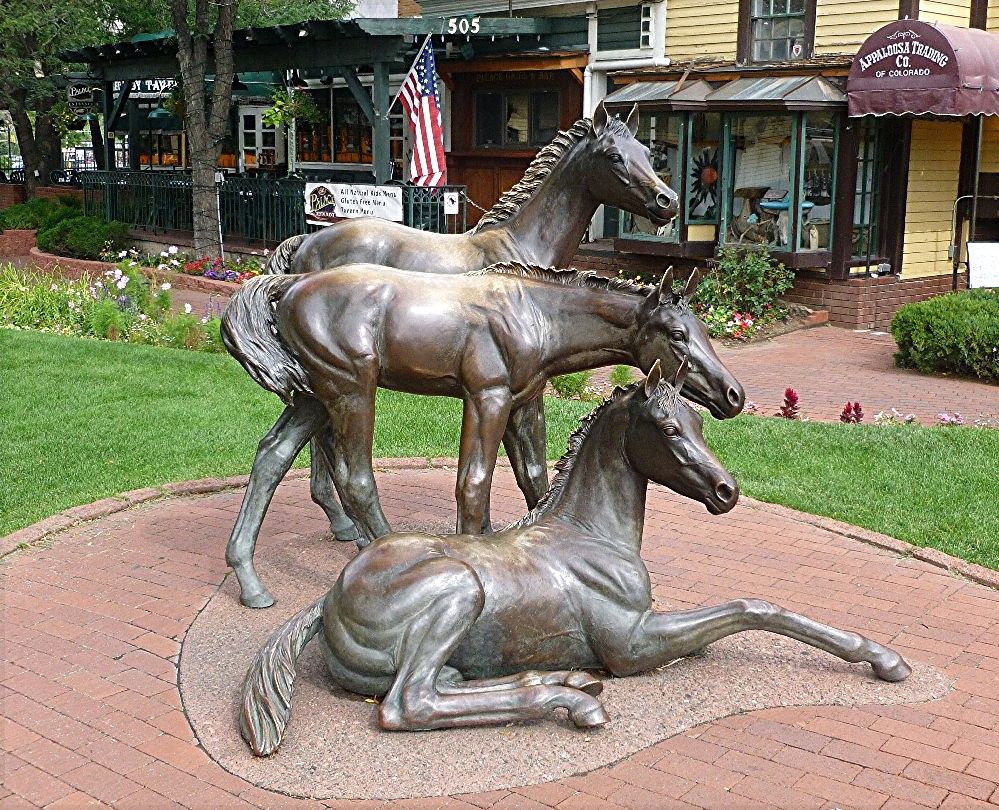
Also in front of the station was this metal statue of three horses.

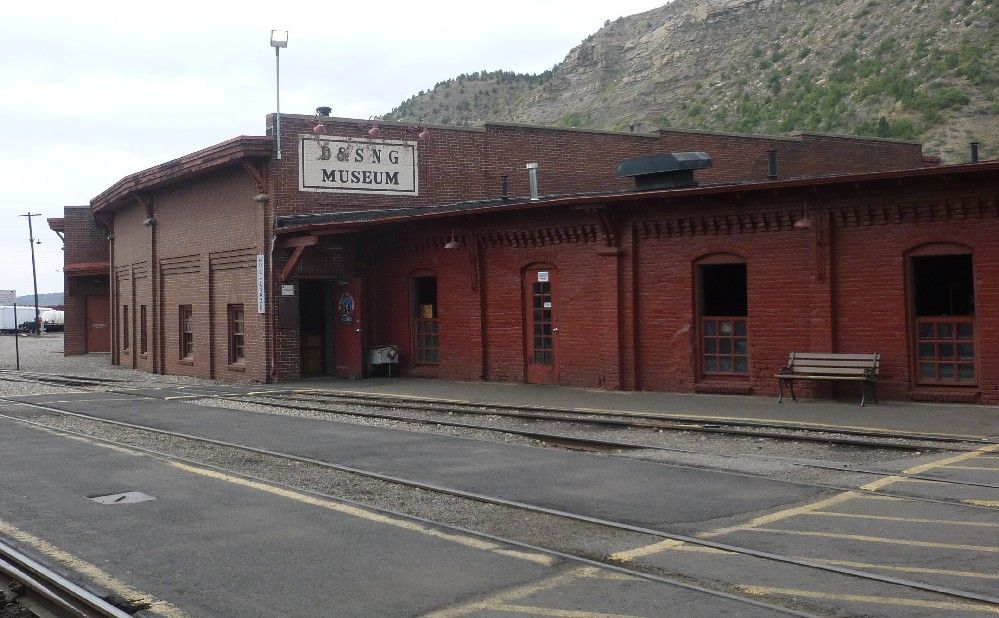
Behind the station is the museum, reached by a walkway.

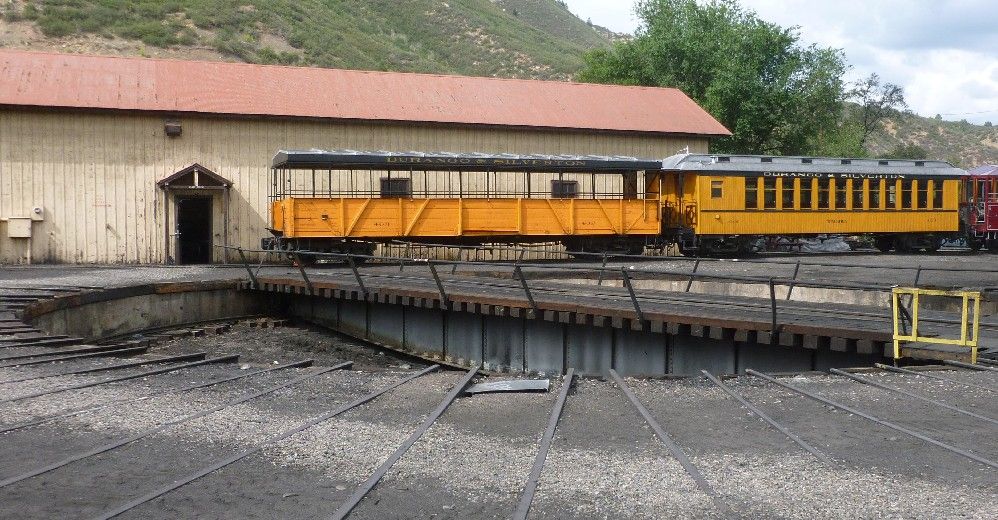
I couldn't really take any good pictures inside the museum, because it was rather dark and everything was close together, but the museum included an outdoor section, with a small viewing area.  This is a turntable, with two coaches behind it.

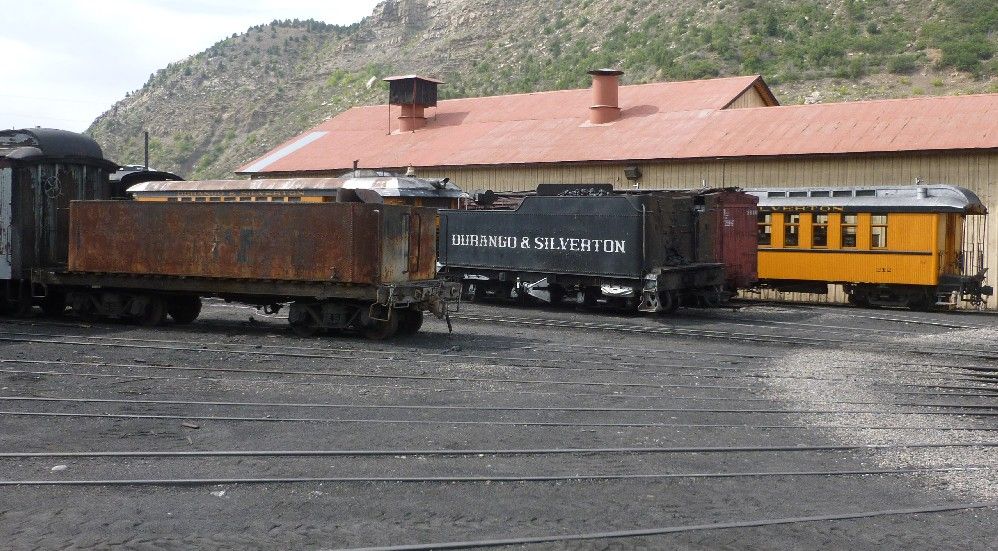
A few more railroad cars were parked near the turntable.

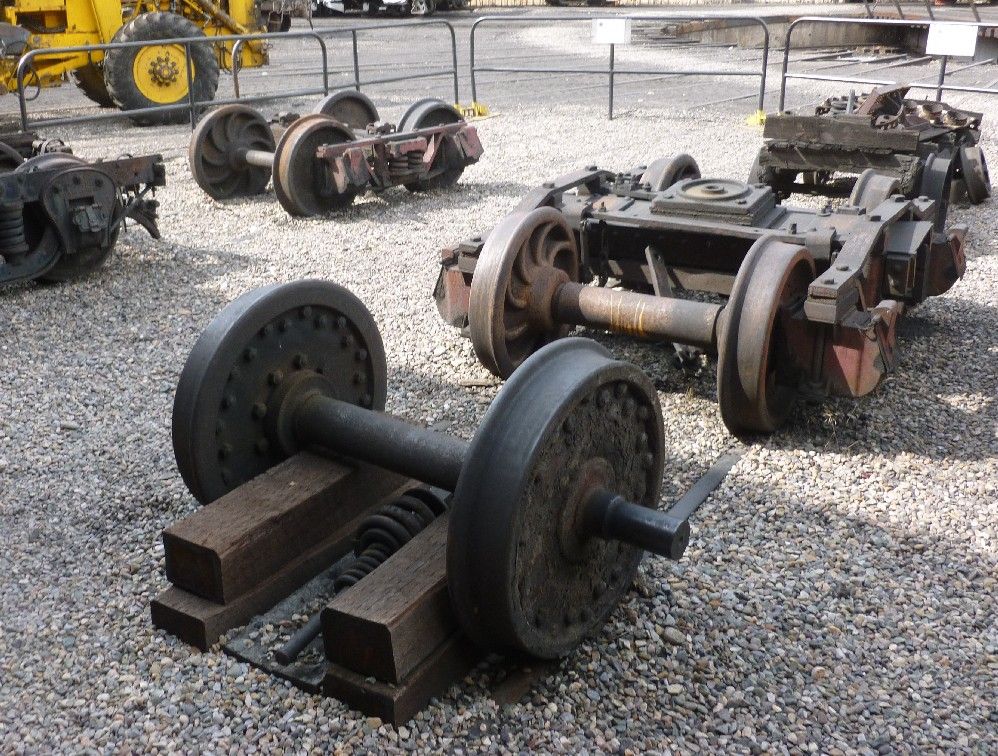
Within the viewing area, whose boundary was marked by the metal barriers, were these old trucks.

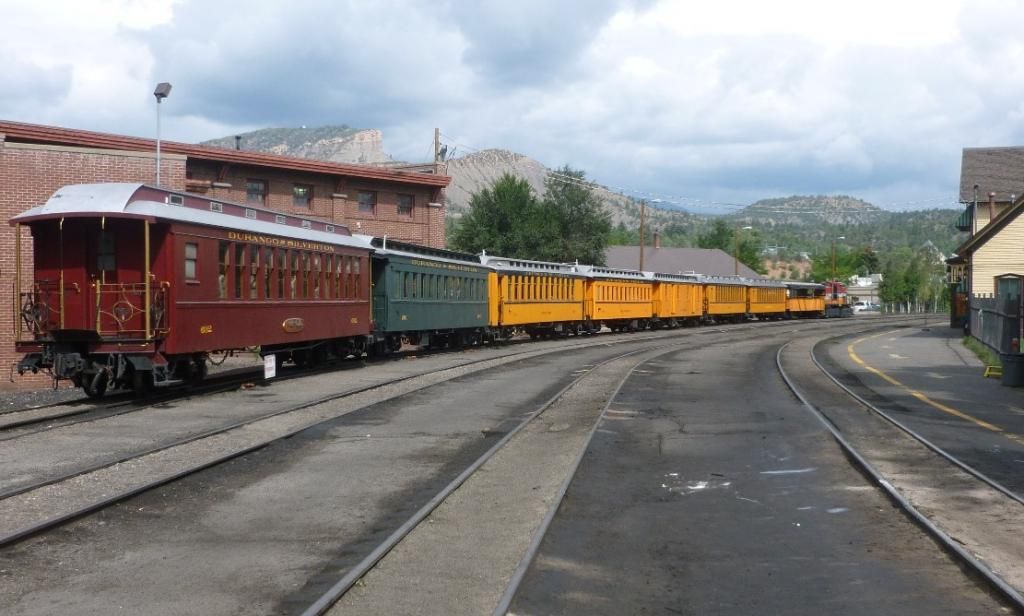
Finally, while walking back to the station (the yellow building on the right), I saw this parked train.  The locomotive at its far end was a diesel electric, instead of the steam engines that I had seen earlier.

Tuesday, August 20, 2013

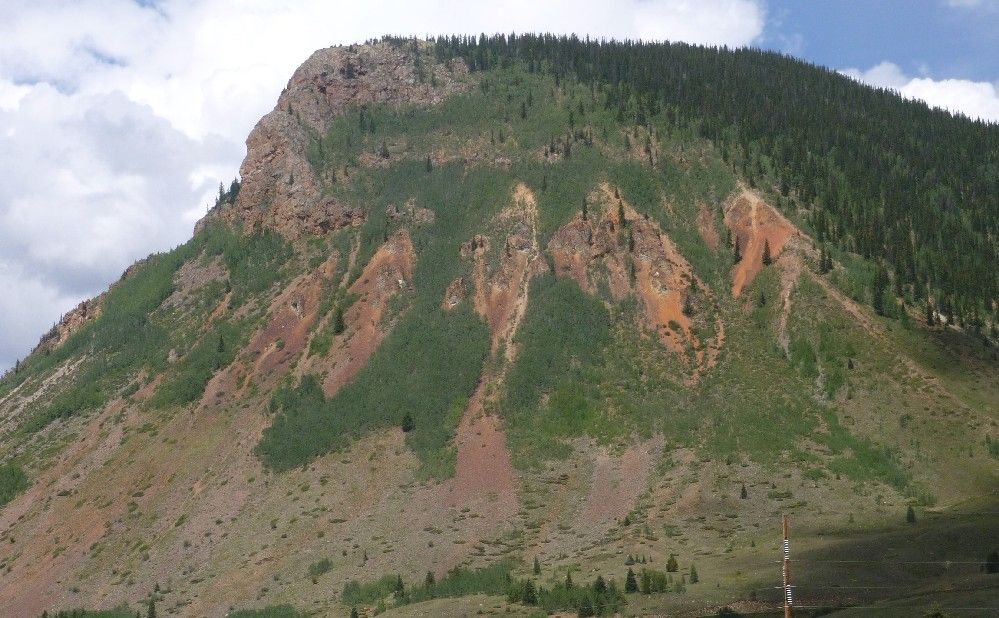
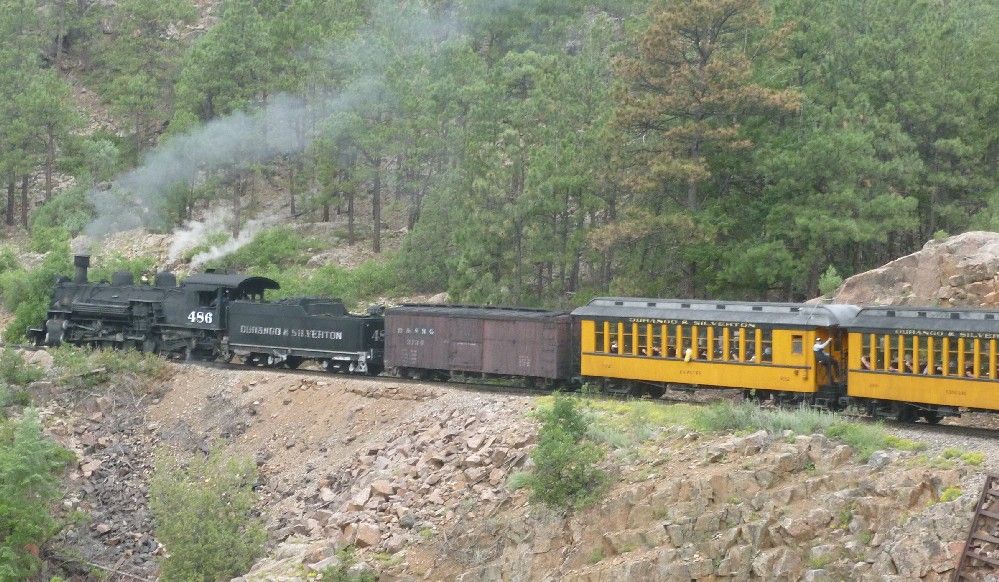
As stated in Part 1, the Durango & Silverton Narrow Gauge Railroad was built in 1881 and 1882, to run between those two places.  After a ride that lasted just over three and a half hours, with a maximum speed of 18 miles per hour (according to one of the conductors), we arrived in Silverton.  The tracks ran along one of the town's streets, which is where the train stopped.  To the west of the town is this mountain:

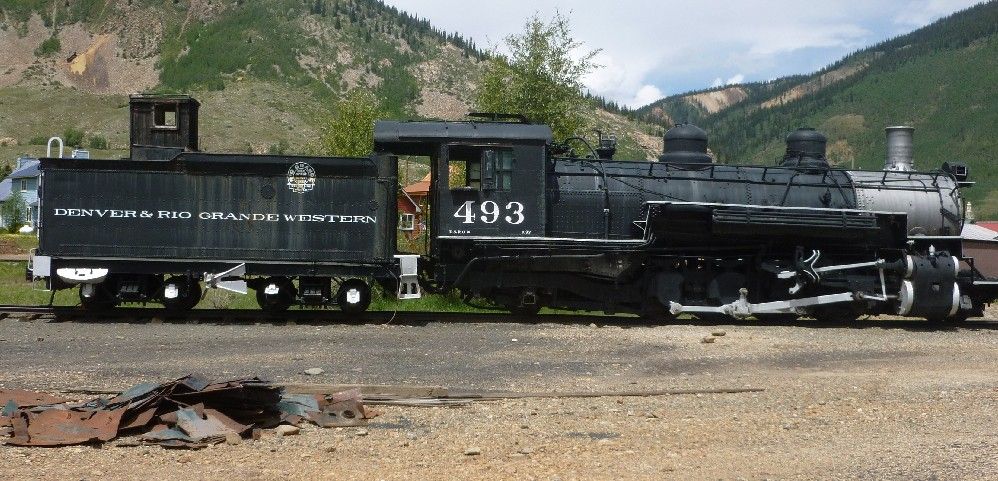
Near the Silverton depot was this old Denver & Rio Grande Western locomotive:

On was way back, I could look out and see the back of the train.

The train stopped at several places to take on water.  This one was on the way back.

This last photo may look like it was taken from some place off the train, but instead it was rounding a bend above the Animas River gorge, thus making this shot possible.

The Durango & Silverton Narrow-Gauge Railroad runs between the two places after which it was named, and is a remnant of a larger rail system called the Denver & Rio Grande.  Originally built to carry supplies to miners in Silverton, the D&S is now used mainly for tourism.  It generally follows the course of the Animas River, but in some places where it flows through a gorge, the railroad runs up to several hundred feet above it.  The D&S was built between 1881 and 1882, and as our one of the conductors warned us, "It feels like it."

Here's the steam locomotive, ready to pull the train out of Durango.


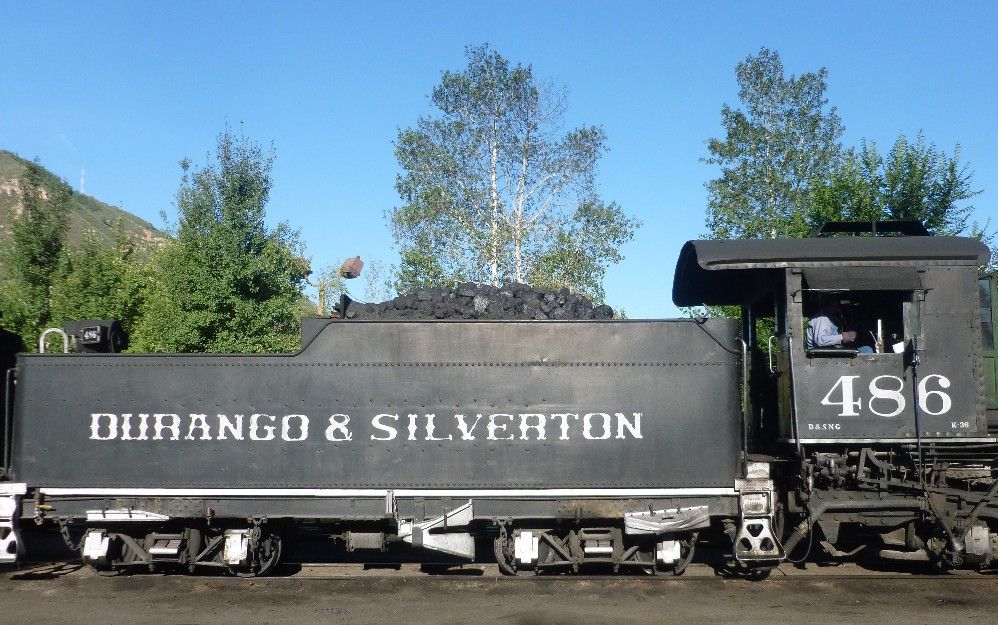
The back of the locomotive and the coal tender:

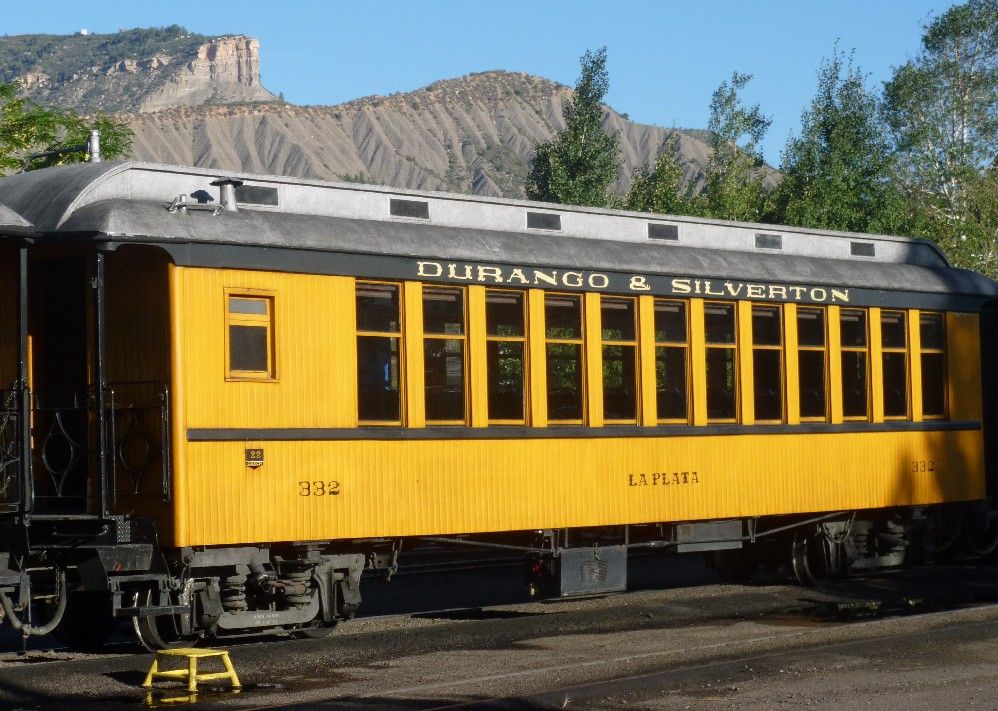
One of the coaches, with a mountain ridge behind it:

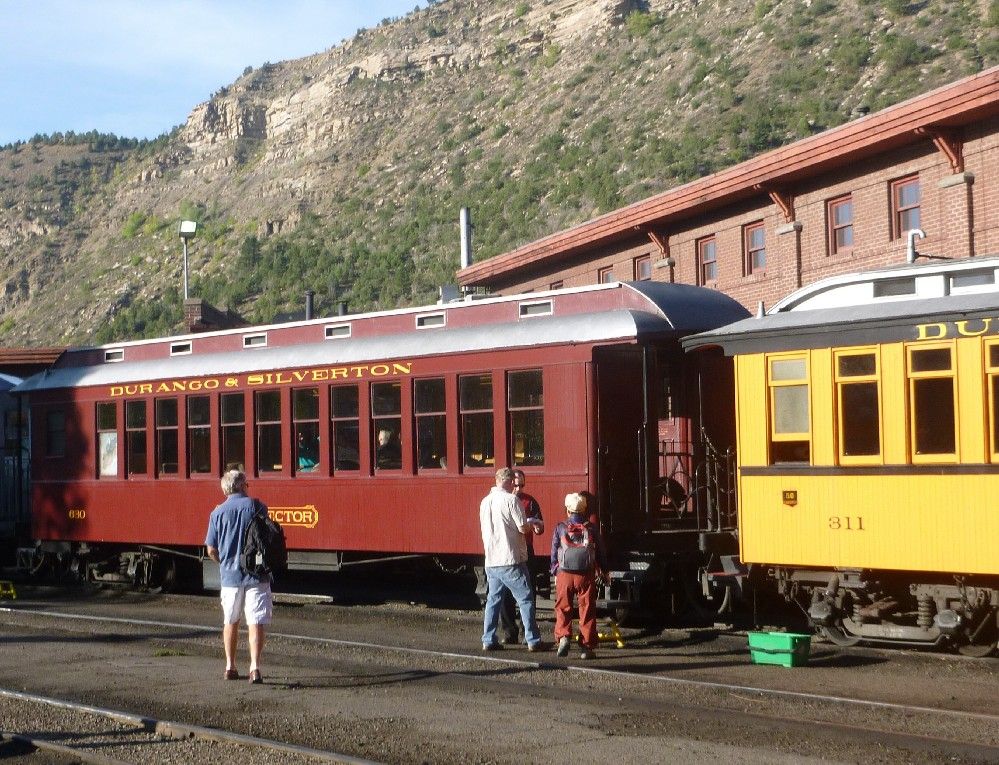
The passengers boarding another coach:

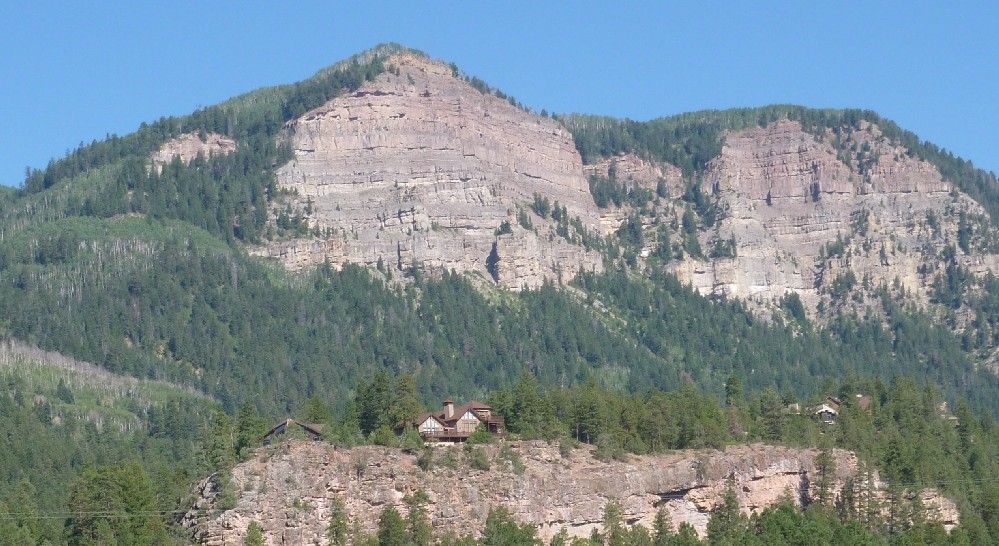
While heading north of Durango, on our left was this house on a hill, with some larger hills behind it.

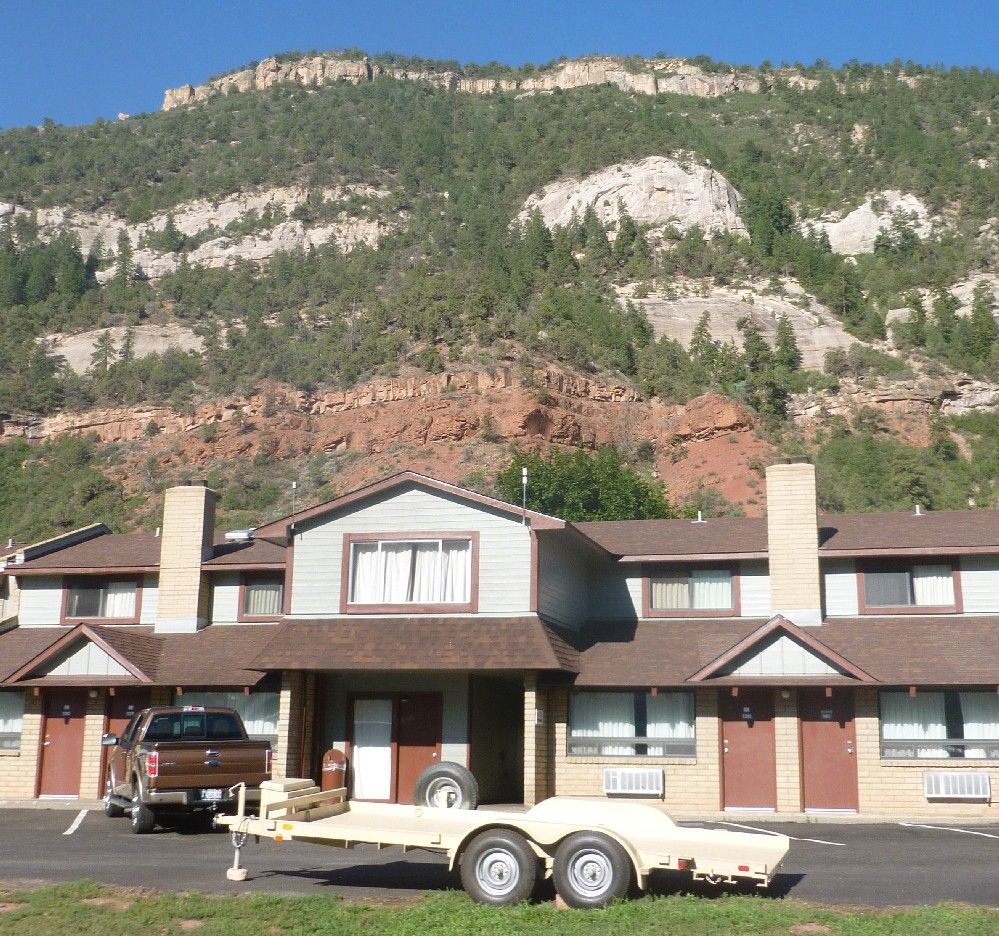
Further along the way was the Iron Horse Inn and a multicolored mountain.

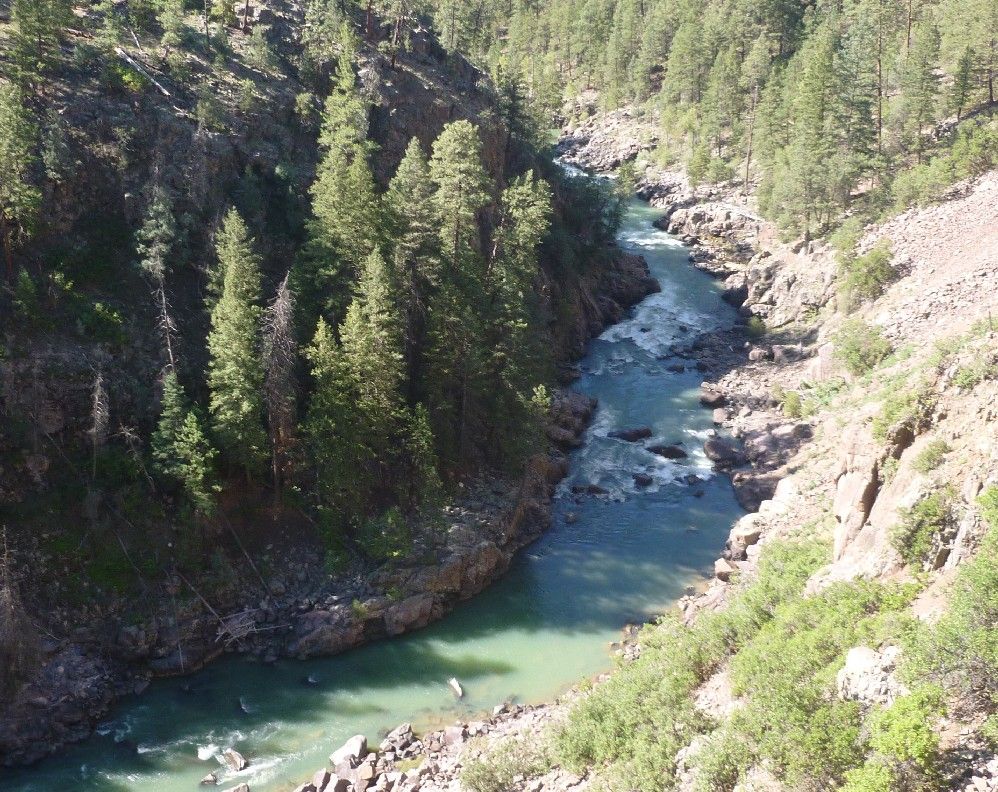
Looking down into the Animas River gorge:

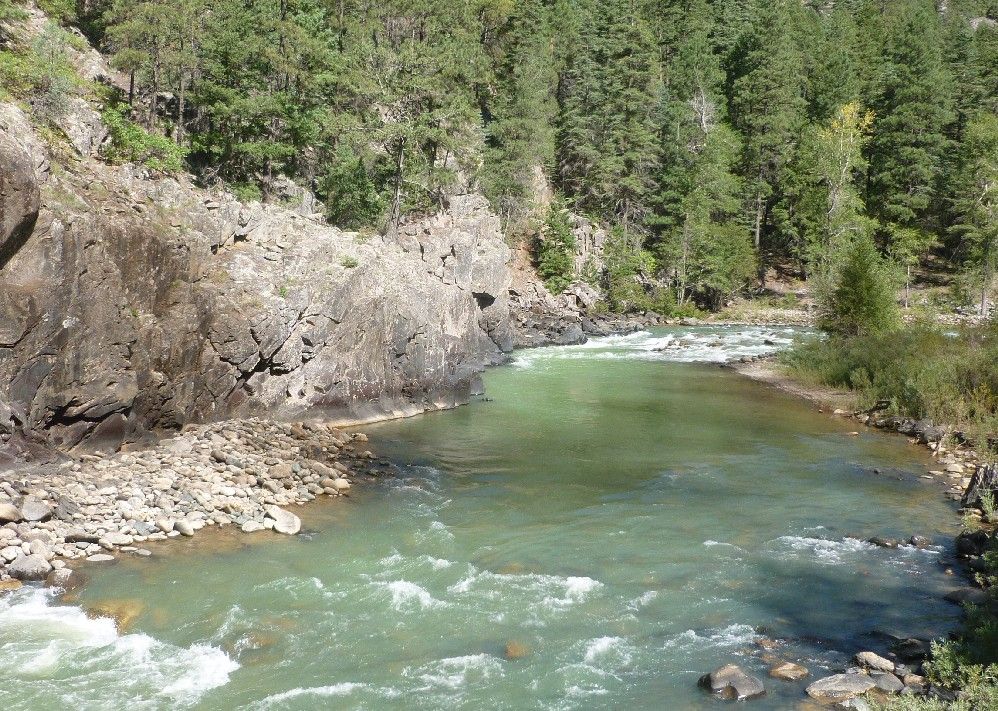
Some rapids along the Animas, looking north and upstream:

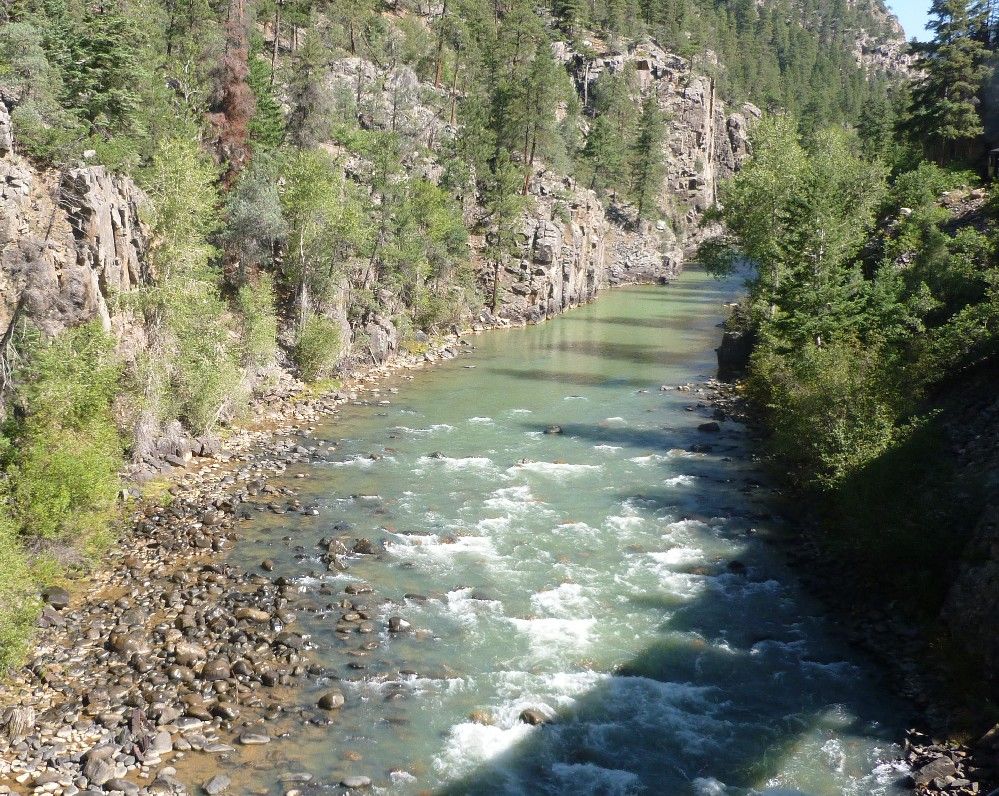
And finally, some more rapids in the Animas, seen while going over a bridge, the shadow of which is clearly recognizable:

Saturday, August 17, 2013

In the annals of history, Constantinople is known for being the second capitol of the Roman Empire, established by Emperor Constantine in a city which had been known as Byzantium, becoming the capitol of the Byzantine Empire after Rome fell, and for falling to the Ottoman Turks over 1,100 years later, who gave the city its third name, Istanbul.  What is less well known is that conquering Constantinople was a goal of Muslim Arabs in the seventh and eight centuries after they had expanded out of the Arabian peninsula, roughly three centuries before Christians in Europe launched the Crusades.  In 674, the Arabs besieged Constantinople for the first time.  This first siege lasted about four years.

In 717, the caliph Suleiman, who ruled in Damascus, sent 120,000 warriors across Asia Minor and 80,000 more fighting men by sea, with the goal of meeting at Constantinople and laying siege.  He put his brother Maslama in charge of his forces, giving him the command, "Stay there until you conquer it or I recall you."  During the siege, Suleiman died and was replaced by Omar II, who recalled Maslama and called off the siege about a year after it began.

Read the story at National Review.  Some more information may be found at Byzantine Battles and Graphic Firing Table.

Monday, July 29, 2013

We all know the story.  People violently taken from their homeland, separated from their families, crammed into ships, forced to endure a voyage across the Atlantic under horrifying conditions, sold into involuntary servitude in an unfamiliar land, treated like beasts of burden, and cruelly punished for the slightest offense.  Yes, we have learned about the slave trade and slavery being inflicted upon countless people from Africa.  It is all well and good that we study this history.

But sometimes, the enslaved were not Africans.  As told by Don Jordan and Michael Walsh in their book White Cargo, about 300,000 slaves were taken by the British from Ireland.  To learn more, read the book review by John Martin at Global Research.

Sunday, July 7, 2013

Today is the eighth anniversary of terrorist suicide bombings in London, which took place on July 7th, 2005.  These attacks are often remembered as "7/7", in the same manner as the Al Qaeda attacks in the United States on September 11th, 2001 are remembered as "9/11".  During the 7/7 attacks, four bombs were detonated, three on London Underground trains and a fourth on a double-decker bus, killing 52 civilians and the bombers themselves, and injuring over 700 others.  The bombers were not known to be members of any terrorist group, but were "home-grown" terrorists who had been "radicalized".  Three were the sons of immigrants from Pakistan, while the other was an immigrant from Jamaica who converted to Islam.

Read more at Wikipedia, BBC News, the Guardian, the History Channel and Terror On The Tube.

Wednesday, June 12, 2013

Last night, a show on MSNBC identified George Wallace, the one-time segregationist governor of Alabama and 4-time presidential candidate, as a Republican, despite his long-time affiliation with the Democrats.  He ran as an independent in the 1972 campaign, during which he was shot and wounded by a would-be assassin.  As a result, he was confined to a wheelchair for the rest of his life, and would die in 1998.

Read more at Mediaite and Breitbart's The Conversation.

I've known about politicians who change parties during their lifetime, most of them, it seems, from Democrat to Republican.  But this is the first time I've heard of one making that switch 15 years after his death.

Thursday, June 6, 2013

June 6th is widely commemorated as the day in 1944 during World War II when the western Allies invaded Europe, landing on the beaches of the German-held French region of Normandy.  From their narrow foothold, they would eventually advance across France, Belgium, the Netherlands, Luxembourg and Germany itself, joining the westward-advancing Soviet army to defeat the once-powerful German military forces.  Here are a few links to some historical facts and modern tributes:

The History Channel has a page on D-Day, with lots of places to explore.

The British version of the History Channel likewise has a D-Day page.

The U.S. Army has a webpage remembering D-Day.

More information on D-Day can be found at the National WWII MuseumWorld War II History Info and the Dwight D. Eisenhower Presidential Library.

Paying tribute to the events of D-Day are Nola(dot)com (New Orleans being the site of the above-mentioned National WWII Museum), the Patriot-News, CNN and Business Insider.
-----
In more recent military history, June 6th was the second day of the Six-Day War, in which Israel defeated neighboring Arab countries, taking the Sinai and the Gaza Strip from Egypt, the West Bank and the old city of Jerusalem from Jordan, and the Golan Heights from Syria.  This war is remembered by History Learning Site, the Jewish Virtual Library, Israeli Weapons and SixDayWar(dot)org.
-----
June 6th, 1799 was the birth date of Alexander Pushkin, considered to be the founder of modern Russian literature.  You can read about him at the Literature Network, Russiapedia, Poetry Lovers Page and AlexanderPushkin(dot)com.
-----
On June 6th, 1949, according to the History Channel, George Orwell's book 1984 was published.
-----
Moving on to today's news:

From ABC News, New Jersey Governor Chris Christie (R) has appointed Jeff Chiesa (R), currently the state's attorney general, to be interim Senator until the special election previously announced by the governor takes place later this year.  Chiesa has stated that he will not run in that election.

From the Washington Post, the FBI and the NSA have been data-mining from nine leading U.S. Internet companies.

From National Review, the House has voted to de-fund President Obama's DREAM policy, which he enacted by executive order.

And from The Hayride, Obama criticizes warrantless wiretaps.

Friday, May 31, 2013

Reclaimed parts of the Mary Rose, the favorite warship of the English king Henry VIII, have been put on display in Portsmouth, U.K.  After being Henry's favorite ship for 34 years, she and her crew of 400 men were lost in 1545 while fighting off a French invasion fleet.  The salvaged parts, mainly a large hull section, were recovered 30 years ago.

Read the story at CBS News.

Sunday, May 12, 2013

From Haaretz:

Archaeologists working near Kibbutz Beit Kama in southern Israel have discovered a building with water channels, pipes, water pools, and a "magnificent 1,500-year-old mosaic floor".  The building was part of a village that also included a church, a water cistern, storerooms and homes.  The village "thrived  from the 4th through 6th centuries C.E.", during which the area was under Roman and then Byzantine rule.

Read the full story.

Monday, May 6, 2013

A historical overview from Epiphanies for Change, recently re-tweeted from someone I follow on Twitter.

Thursday, April 25, 2013

The George W. Bush Presidential Library and Museum was dedicated today in a ceremony attended by President Obama and former Presidents Carter, Clinton, Bush and Bush.  The library is on the campus of Southern Methodist University in Dallas, Texas.  Here are some stories from today's events:

From the Washington Post, the other presidents offer tributes to George W. Bush.

From CBS News, a look inside the George W. Bush library.

From the Los Angeles Times, the second President Bush gives his speech, affirming his faith in the U.S.

Fox News has some video highlights of the dedication.

The Christian Science Monitor wonders if Bush is "on the rebound".

Writing in CNN, Donna Brazile says that "Bush came through on Katrina."

From Business Insider, the Bush presidency in pictures.

From Weasel Zippers, Dubya's mom doesn't seem to too comfortable with his successor.

In other news:

From the Times Union, today is indeed World Penguin Day.  A hundred years ago the world saw the first professional photographs of Antarctic penguins.

From the Daily Mail, in Dubai, female U.S. sailor 1 - would-be rapist 0.

From the Miami Herald, a California filmmaker has been detained in Venezuela.

From the New York Daily News, Yankee shortstop Derek Jeter, who has so far missed the entire season due to an ankle injury, promises to return.

From CNS News, one out of every five U.S. households is on food stamps.

From Kurier, about 40 Muslims in Vienna demonstrate for the Boston bomber.  Via Weasel Zippers, who provides a partial translation.

And from SF Gate, a school in the U.K. stops airport noise with domes.

Monday, April 22, 2013

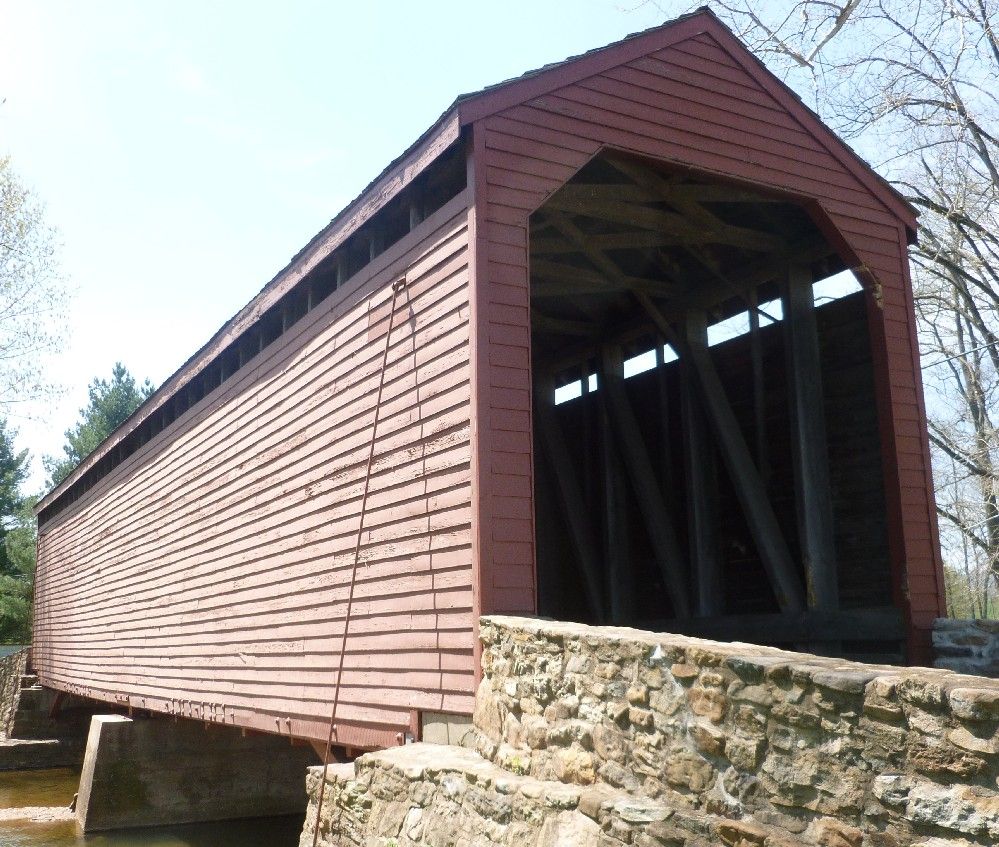
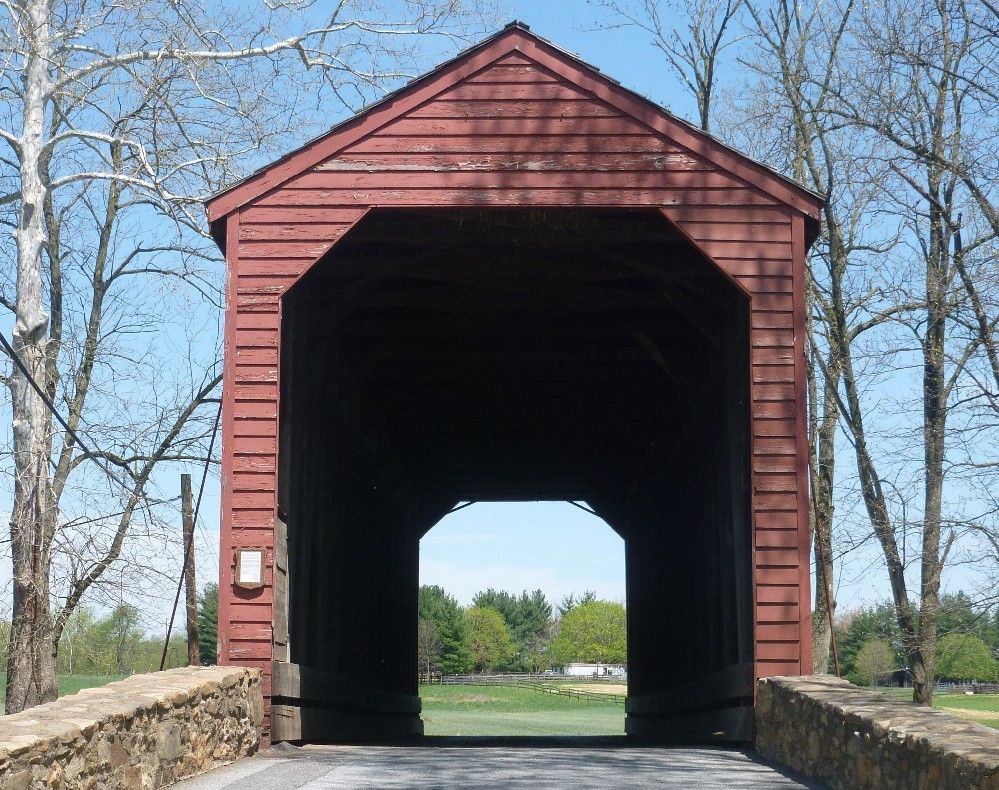
One of only six covered bridges still in use in Maryland, the Loys Station bridge was named for a nearby railroad station.  Originally constructed in 1848, the bridge may have been used by Union General George Meade pursuing Confederate troops retreating from Gettysburg.  In 1991, the bridge was damaged when a pickup truck was parked inside it and set on fire.  After undergoing repairs, the bridge was reopened in 1994.  The bridge's namesake railroad station is long gone, but the tracks are still in place.

Here's a view of the bridge from near its north end, with its east side in sunlight.

Looking directly through the bridge from its south end.

For more information on Loys Station Bridge, go here, and browse around the site to learn about the other five covered bridges in Maryland.

Thursday, April 18, 2013

On April 16, 1775 Bostonian silversmith and express rider Paul Revere was sent by Dr. Joseph Warren to warn Samuel Adams and John Hancock of the approach of British soldiers intending to arrest them.  He rode out toward Lexington, stopping at houses along the way.  As he approached the place where Adams and Hancock were staying, he was asked not to make so much noise.  His response was "Noise!  You'll have noise enough before long.  The regulars are coming out!"  It was this statement that over the years has been distorted into "The British are coming!"  Calling the troops "British" would not have made much sense at the time, because in April of 1775, the Massachusetts colonists were all British.  Before the night was over, Revere was joined by two other riders, arrested by British troops, and released without his horse.  Read more about the ride at  The Paul Revere House.

More about Paul Revere can be found at The New American, The History Channel, NNDB and Biography(dot)com.

Revere's ride was re-enacted on Patriot's Day, several hours before the attack at the Boston Marathon.

Sunday, April 14, 2013

No, that's not a misspelling of "Astroturf".  While reading this post at Winds of Jihad, I learned that Turkey has a black minority, a combination of people descended from slaves brought in during the past and people who immigrated into the country of their own free will.  They are commonly called "Afro-Turks", and like black minorities elsewhere, have faced pervasive discrimination.  Only a dozen days ago did I read and post about the black people of Iraq.

Read more at The Global Dispatches, Qantara and the Hurriyet Daily News, the links coming courtesy of Winds of Jihad.

Friday, April 12, 2013

This one comes from the Tipsheet at Townhall:

Why, especially with the Sequester going on, does the Department of Homeland Security need, of all things, bagpipes?

Does this mean that we're headed for our version of the Highland Clearances?  (To learn more, you can also go here and here.)

Monday, April 8, 2013

Margaret Thatcher, who served as the United Kingdom's first female Prime Minister, died today at age 87 after a stroke.  Known as the "Iron Lady", a sobriquet bestowed by the Soviet media, Thatcher was the leader of Britain's Conservative Party from 1975 to 1990, and Prime Minister from 1979 to 1990, when she was ousted from both positions in favor John Major.  During her time in office, the United Kingdom's government moved rightward, privatizing some of their state-run businesses, and won a war against Argentina over the Falkland Islands in 1982.  She was also a major ally of American President Ronald Reagan during the waning years of the Cold War, and later advised his successor George H. W. Bush "this is no time to go wobbly" as he considered his response to Saddam Hussein's invasion of Kuwait in 1990.  After stepping down, she was named a Baroness and served in the House of Lords.

Margaret Roberts was born in 1925 in Grantham in central England.  Her father was a grocer and a Methodist lay minister.  She received a degree in chemistry at Oxford University and worked as a research chemist before becoming a barrister.  She may have helped to invent what came to be known as "soft-serve" ice cream.  She married local businessman Denis Thatcher in 1951, and gave birth to fraternal twins Carol and Mark two years later.  In 1959, she was elected to the House of Commons for the first time.  She stopped making public appearances in 2002 after suffering a stroke, making an exception to attend Reagan's funeral in 2004, and later had several smaller stokes.  Her husband Denis, 11 years her senior, died in 2003. Funeral services will be held at St. Paul's Cathedral, followed by a private cremation.

Read more at CNN, Fox News, the Guardian, BBC News, the Wall Street Journal and the Independent.

Sunday, April 7, 2013

This evening was the start of Holocaust Remembrance Day.  It will end at sunset tomorrow, following the Jewish and Biblical tradition of reckoning a day from one sunset to the next.  Yom HaShoah is observed on the Jewish Calendar date of 27 Nissan, which was chosen because the date fell after the Passover, but within the time of the Warsaw Ghetto uprising.  The corresponding date on the Gregorian Calendar can vary quite a bit, due to the Jewish Calendar being based on lunar cycles and sometimes adding a "leap month".

Read more at About(dot)com and Monkey In The Middle, written by Findalis, one of my friends in the blogosphere.

In 2000, I had the somber privilege of visiting Auschwitz and Birkenau, both located near the Polish town of Oświęcim.  (Birkenau and another unit named Monowitz, used to supply German chemical plants with slave labor, started out as sub-camps of Auschwitz.)  One of the barracks at Auschwitz has been converted into a museum, full of exhibits containing artifacts taken from the prisoners, similar to those at the Holocaust Museum in Washington, DC, but much larger.  Auschwitz still includes the wire fences with posts with curved tops, a few ovens used for cremation, and the ominous sign "Arbeit macht frei".  Only a small fraction of the numerous wooden barracks remain at Birkenau, but the camp otherwise has largely been preserved.
In an attempt to promote an art exhibit, the ad agency Droga5 (whose name resembles "droga", the Polish word for "road") has enabled 5,000 pay phones in Manhattan to connect the caller with someone reminiscing about the way things were in 1993, the year which saw the first attack on the World Trade Center and the first election of Mayor Rudy Giuliani.  Among those recounting the past is former NY Yankees pitcher Jim Abbott, who threw a no-hitter that year.

Read the story at SF Gate and CBS New York.

It's notable that there still are pay phones in New York City.  For those of you too young to remember them, read about them here.

Tuesday, April 2, 2013

Iraq has a black minority population, who are there for essentially the same reason as the black people in the United States, and experience many of the same problems faces by black Americans.  They descend from slaves taken from Africa centuries ago, and number about 2 million.

This 2008 article in the Los Angeles Times recounts how some black Iraqis were rooting for then-Senator Obama to win the American presidency.  According to the New York Times, some of them were courted by Iraqi political candidates in the 2010 elections.  As Frontpage Mag reports, slavery is still practiced in parts of the Islamic world.
Big Foots Place BlogThe owner of this website is a participant in the Amazon Services LLC Associates Program, an affiliate advertising program designed to provide a means for sites to earn advertising fees by advertising and linking to Amazon properties including, but not limited to, amazon.com, endless.com, myhabit.com, smallparts.com, or amazonwireless.com.