


Thursday, September 20, 2012
Tuesday, September 18, 2012
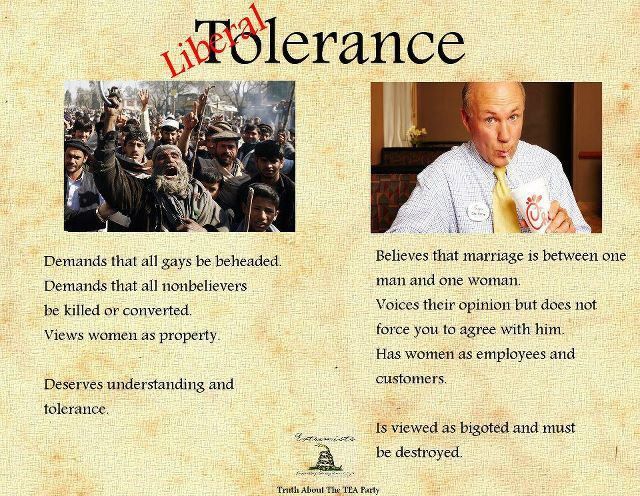
I would point out that the claims in the above pic are not totally accurate. Where Muslims sentence gays to die, the method of execution isn't always beheading. Instead, in some places it's hanging, stoning or even burning (a method used centuries ago in Europe). For unbelievers who are Christian or Jewish, there is a third option, submitting to theocratic Muslim rule as a dhimmi, with far fewer rights than Muslims, and with far more restrictions. But the general point is correct. Fundamentalist Muslims, if given the chance, would make the Christian right look like agnostic libertarians.
Monday, September 17, 2012
On 17 September 1787, 42 of the 55 delegates to the Philadelphia convention held their final meeting, to sign the document which the convention had produced, the United States Constitution.
and
On 17 September 1862, Union forces under General George McClellan and Confederate troops under General Robert E. Lee fought the Battle of Antietam near Sharpsburg, Maryland. (The south would call it the Battle of Sharpsburg.) This date is still the bloodiest single day in American military history. Although the Battle of Gettysburg took more lives, it was spread out over three days, none of which equalled the single-day total at Antietam.
and
On 17 September 1862, Union forces under General George McClellan and Confederate troops under General Robert E. Lee fought the Battle of Antietam near Sharpsburg, Maryland. (The south would call it the Battle of Sharpsburg.) This date is still the bloodiest single day in American military history. Although the Battle of Gettysburg took more lives, it was spread out over three days, none of which equalled the single-day total at Antietam.
Sunday, September 16, 2012
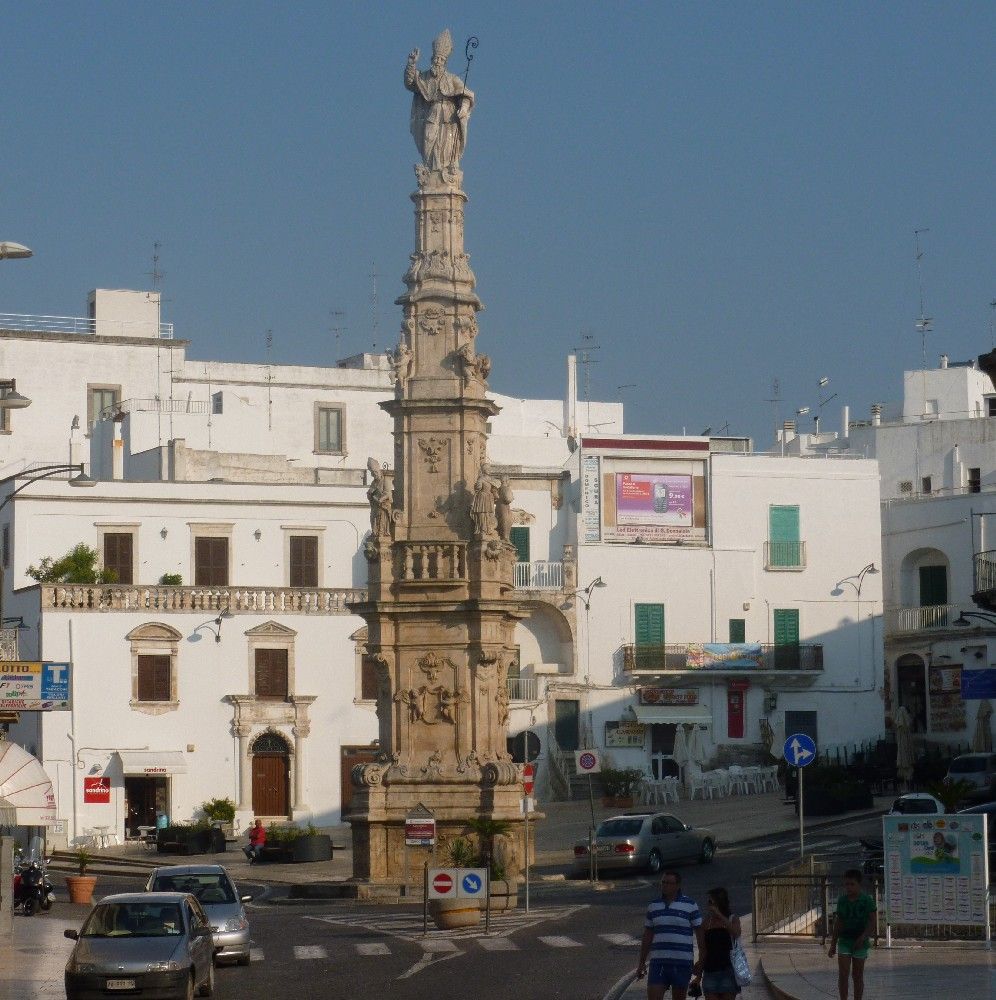
On the way back from Lecce to Polignano a Mare, we swung by Ostuni, a town that sits on a hill about 5 miles from the Adriatic coast. There weren't too many things to photograph in this town, but it did give us a chance to walk off some of that pasta we'd been eating. We proceeded from our bus's parking place to the main square, and then to the cathedral, a walk that was mostly uphill. The square includes the column of Saint Oronzo, said to be the first bishop of Lecce.

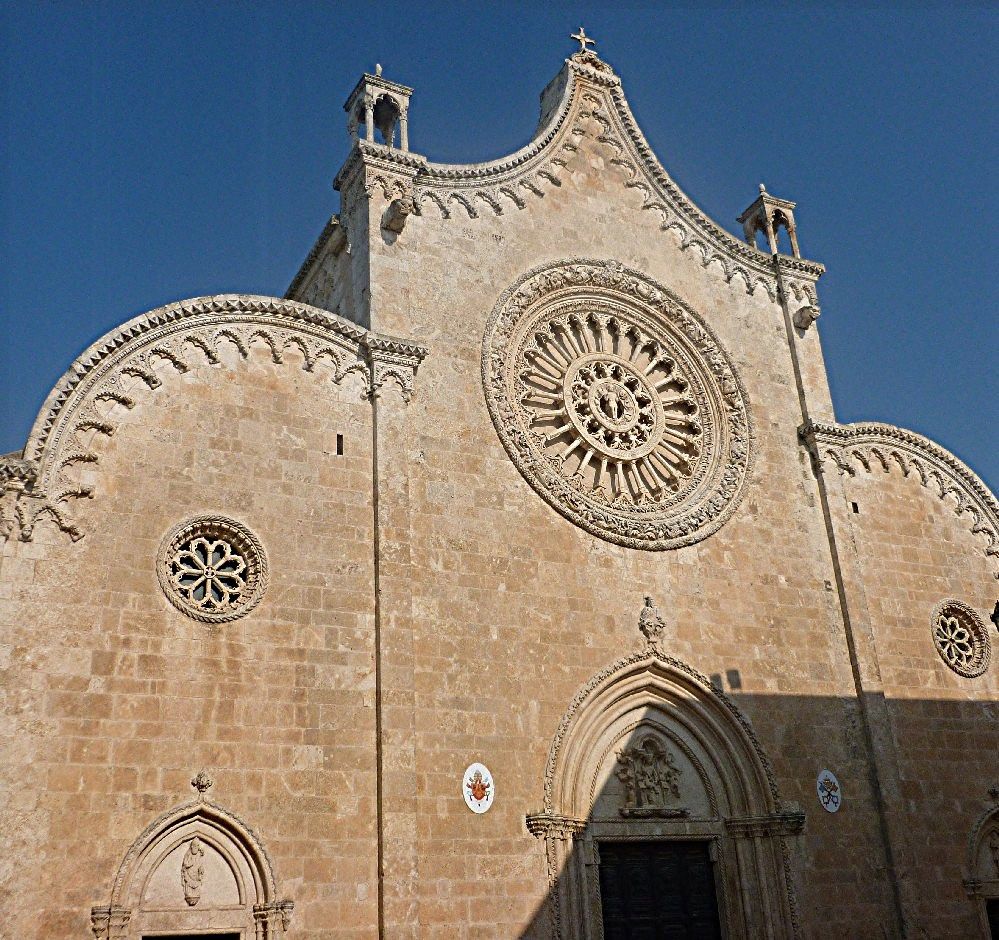
Here's part of the front of the cathedral:

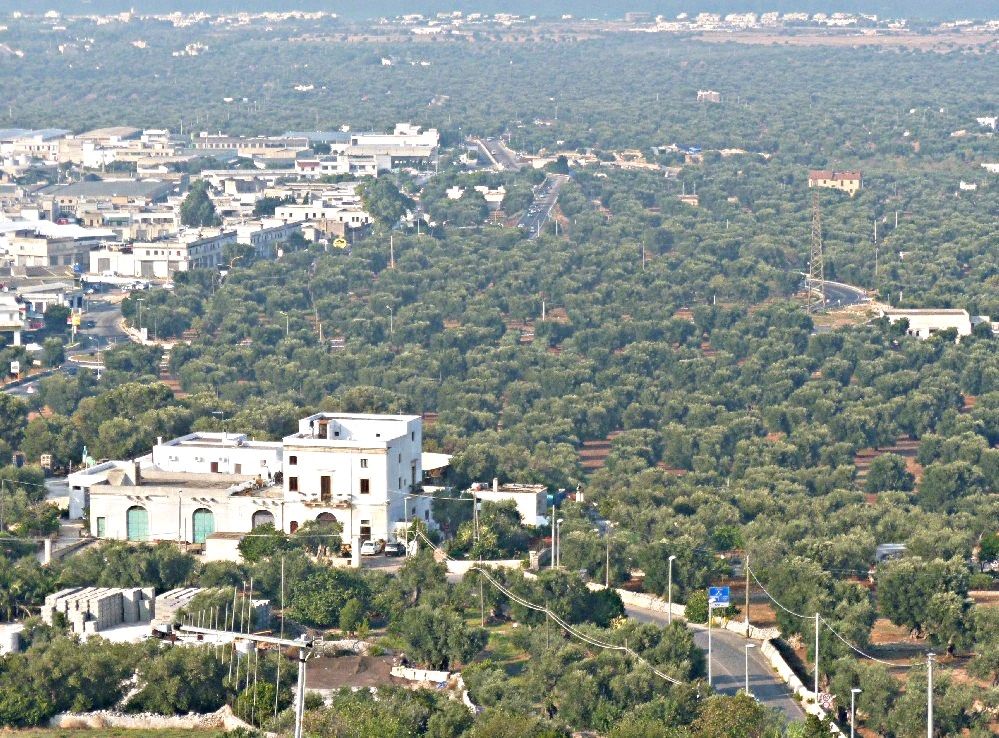
From an overlook not far from the cathedral, we could see all the way to the Adriatic.

The Apulia/Puglia region has a lot of flat land, unlike the other parts of Italy I've stayed in. Southeast of Ostuni toward Lecce, there were several ridges that seemed to parallel the coastline, but except for our visit ot Ostuni, we stayed on the coastal plain.
Here's part of the front of the cathedral:
From an overlook not far from the cathedral, we could see all the way to the Adriatic.
The Apulia/Puglia region has a lot of flat land, unlike the other parts of Italy I've stayed in. Southeast of Ostuni toward Lecce, there were several ridges that seemed to parallel the coastline, but except for our visit ot Ostuni, we stayed on the coastal plain.
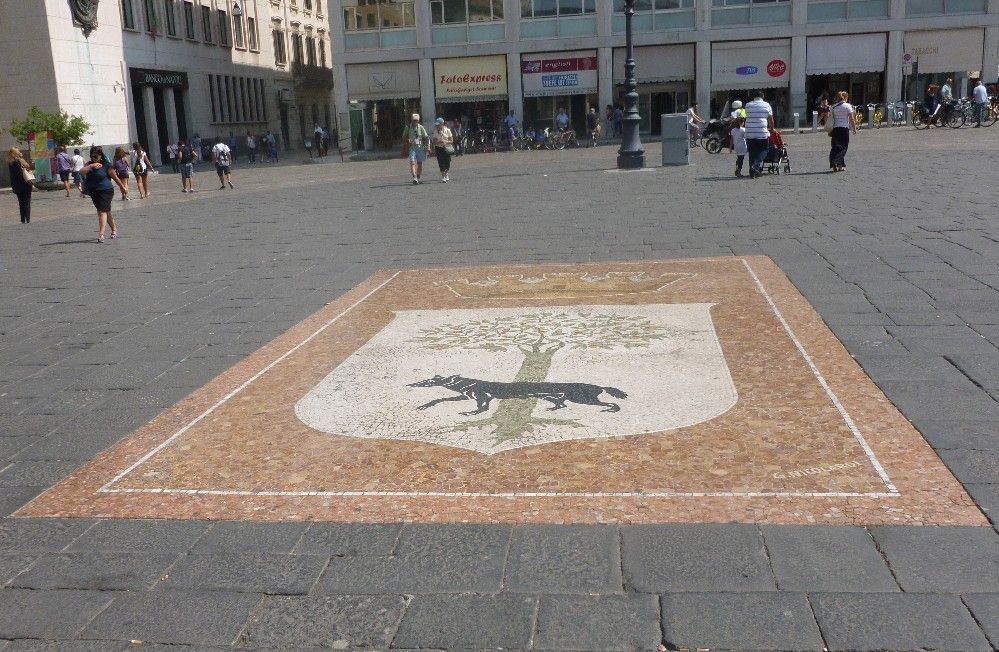
After our visit to Lecce's Basilica di Santa Croce (see Part 1), our tour group proceeded to the city's main square. Within the square was the city's emblem, which is based on its past and present names. The Romans called this place Lupiae, which is derived from lupa ("she-wolf"). The modern name is derived from that of an oak tree. Thus, the emblem depicts both the wolf and the oak.

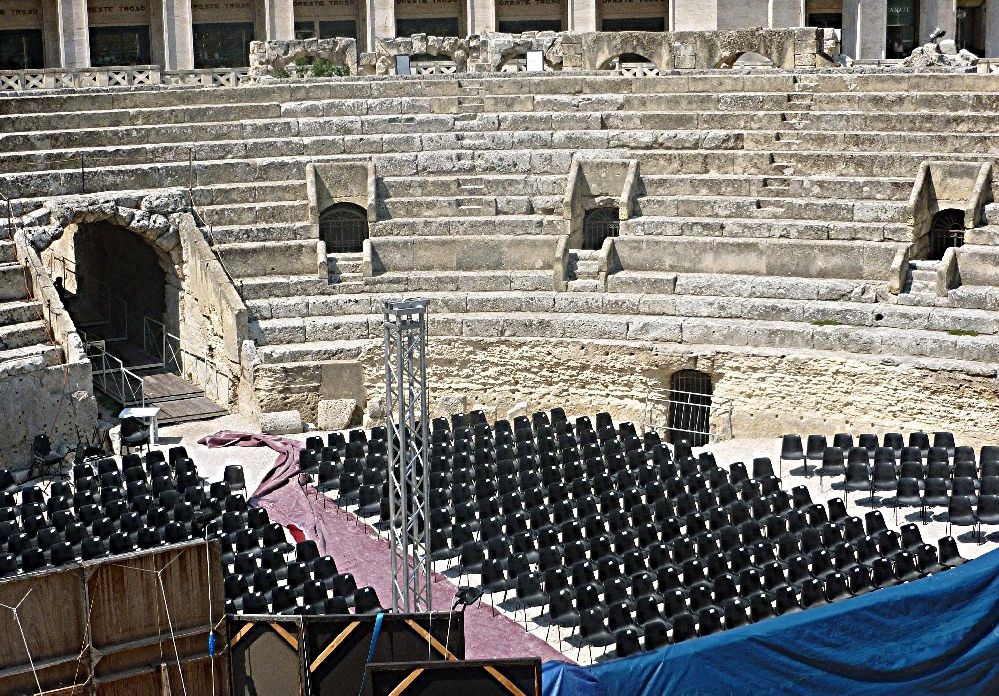
Also within the main square is the excavated half of a Roman amphitheater. It appears that some modern seating has been added.

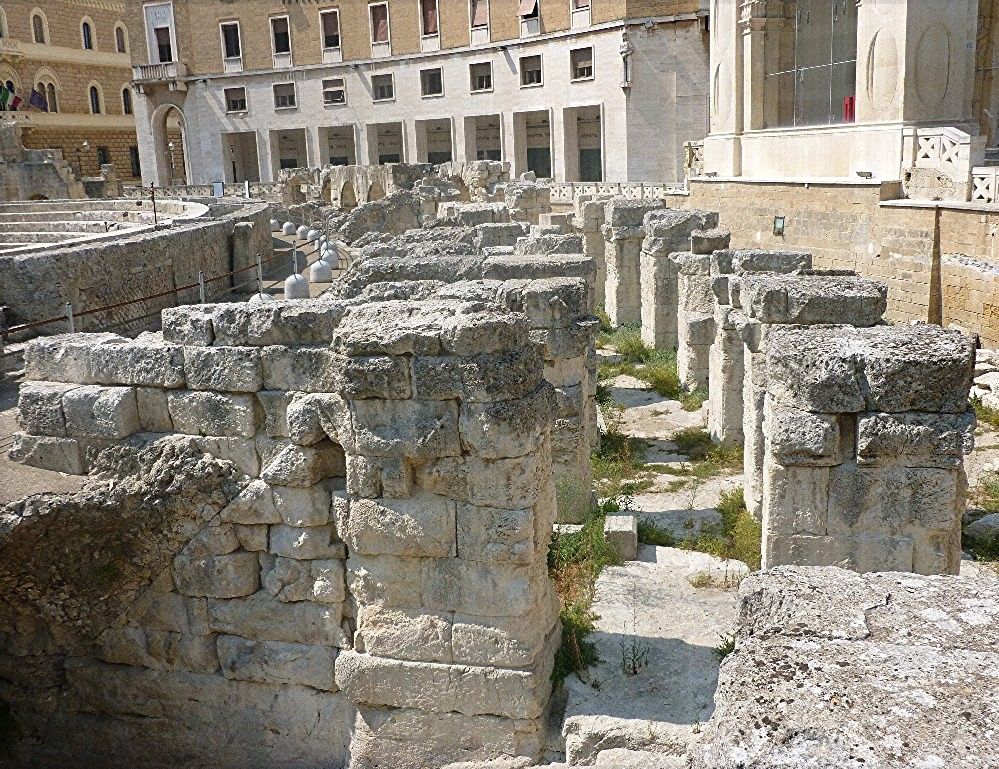
Around the perimeter of the amphitheater are these stone structures:

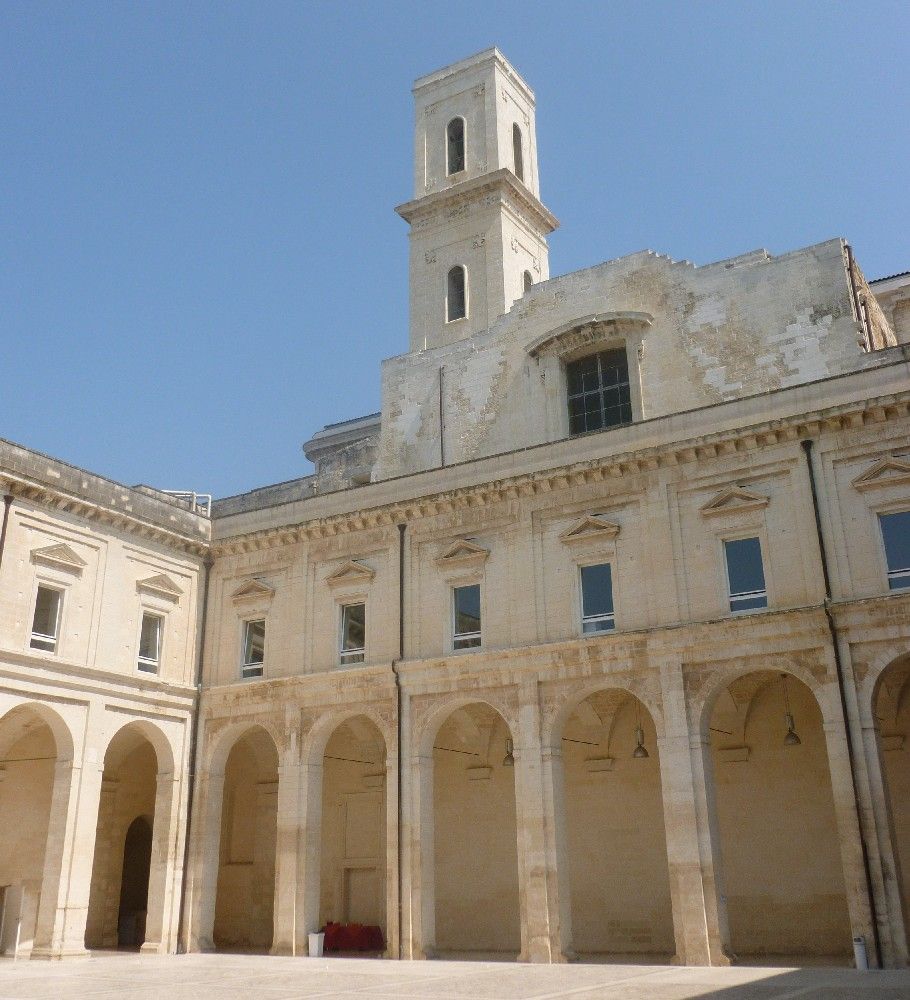
During some free time, I wandered off on my own, and found this courtyard:

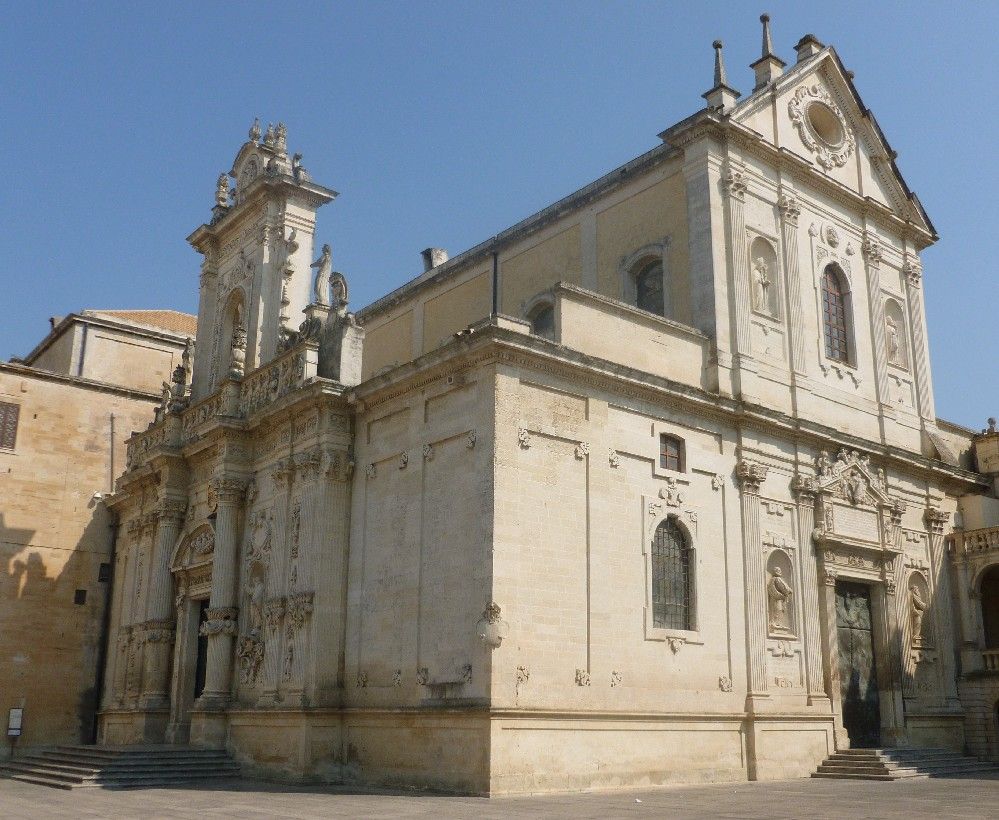
I also found the duomo (cathedral).

After a change in direction, I found a fountain that included some organ pipes.

After all this sightseeing, we had a pizza lunch at Il Ristoro dei Templari, and then headed off to our next destination.
Also within the main square is the excavated half of a Roman amphitheater. It appears that some modern seating has been added.
Around the perimeter of the amphitheater are these stone structures:
During some free time, I wandered off on my own, and found this courtyard:
I also found the duomo (cathedral).
After a change in direction, I found a fountain that included some organ pipes.

After all this sightseeing, we had a pizza lunch at Il Ristoro dei Templari, and then headed off to our next destination.
The southeasternmost part of the Italian mainland is the Salento peninsula, which extends between the southernmost part of the Adriatic Sea and the Gulf of Taranto, thus forming the "heel" of Italy's "boot". The main city on the Salento is Lecce, known for its baroque architecture, and often called the "Florence of the south". Lecce was the southeasternmost place visited by our tour group. Before entering the city, we made a brief stop near a traffic circle, which included an electrical box topped by a statue.

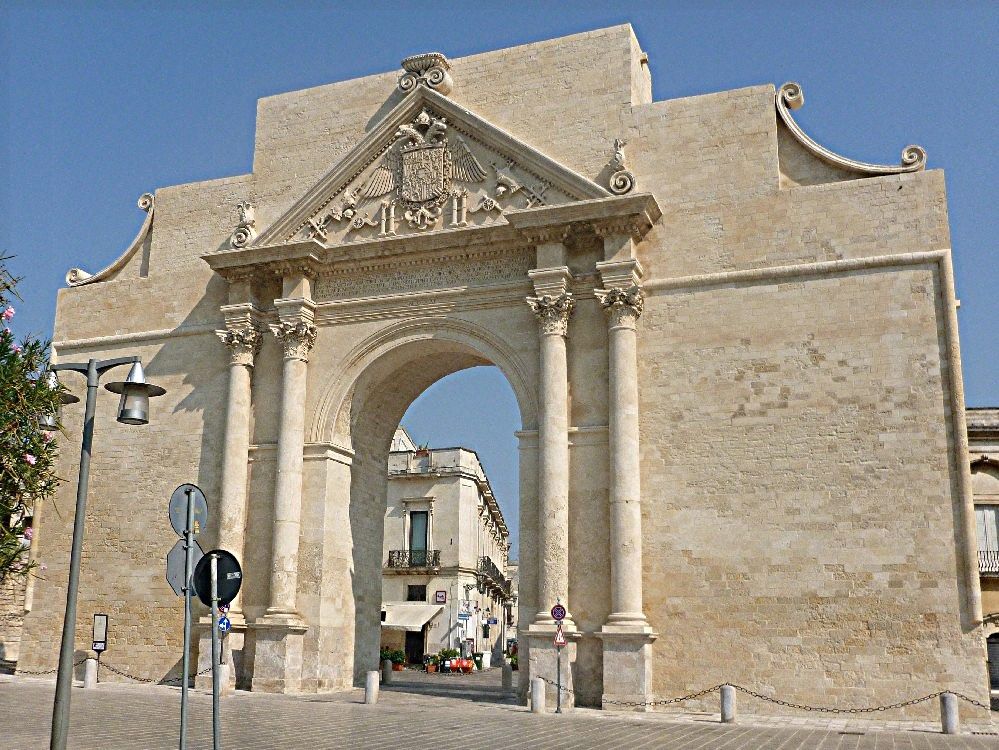
We entered the main part of the city by going through a triumphal arch.

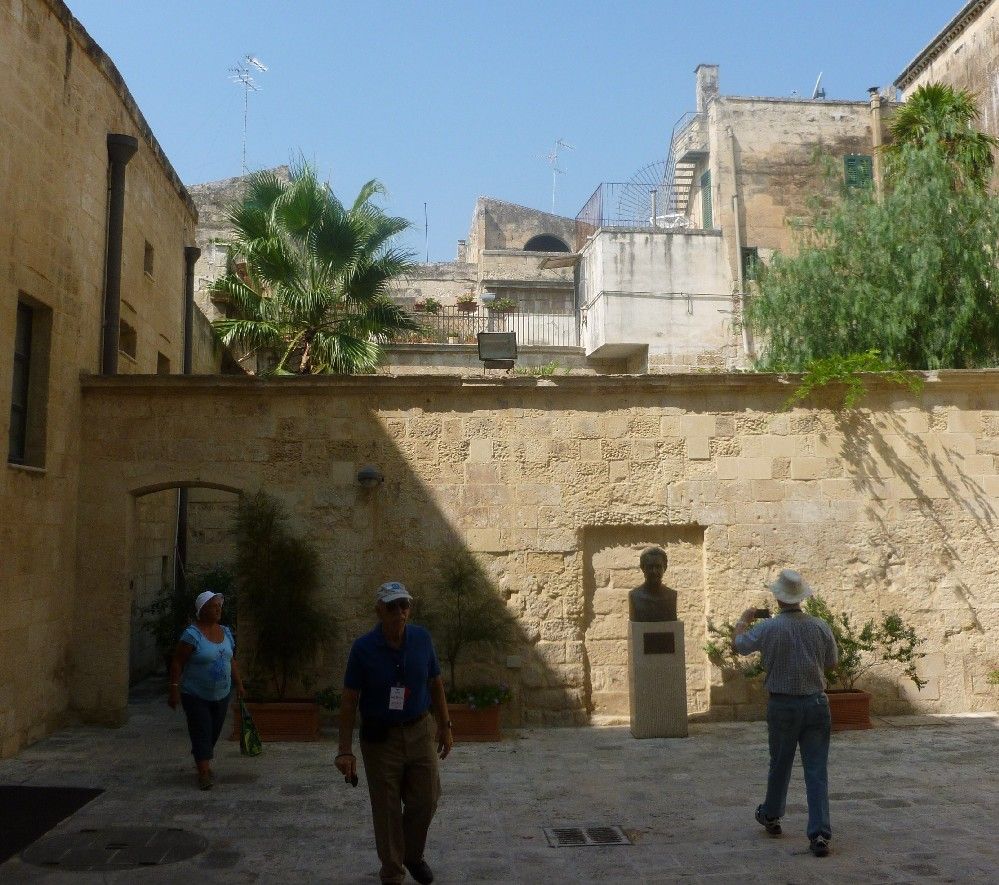
As we proceeded down a narrow street, a few of us wandered into a small courtyard.

Back on the street, we saw two windows that formed a Moorish balcony. Notice the difference in condition between the two sections of stonework below each respective window.

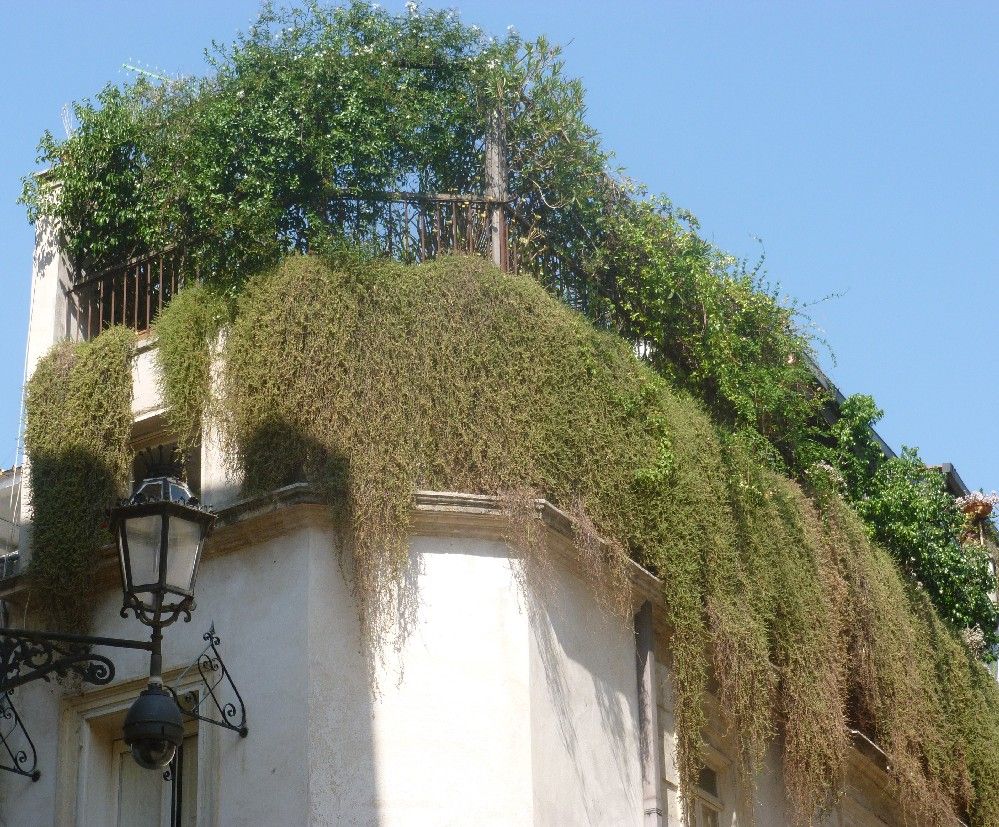
At a street corner, we saw this Italian terrace:

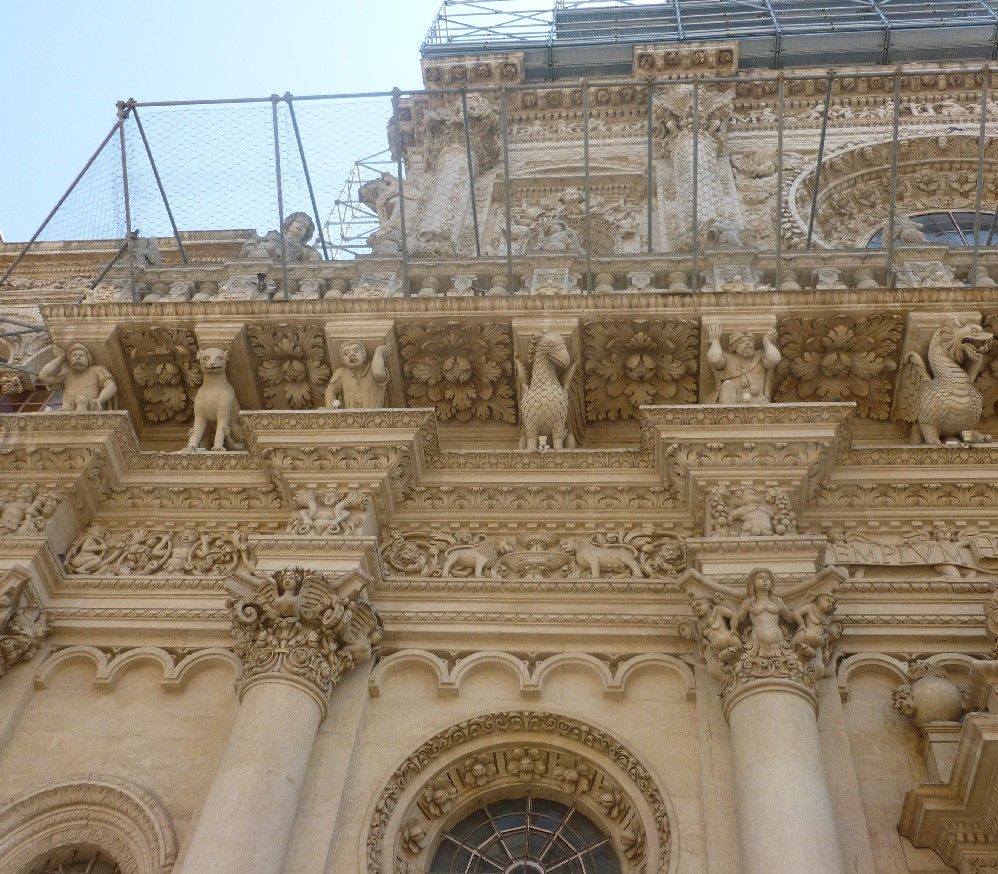
We proceeded to our first stop in Lecce, the Basilica di Santa Croce (Holy Cross). The very ornate façade was undergoing some renovation, and thus partially blocked by scaffolding. I got this shot of a section of the façade, which shows human and animal figures "supporting" the section above them.

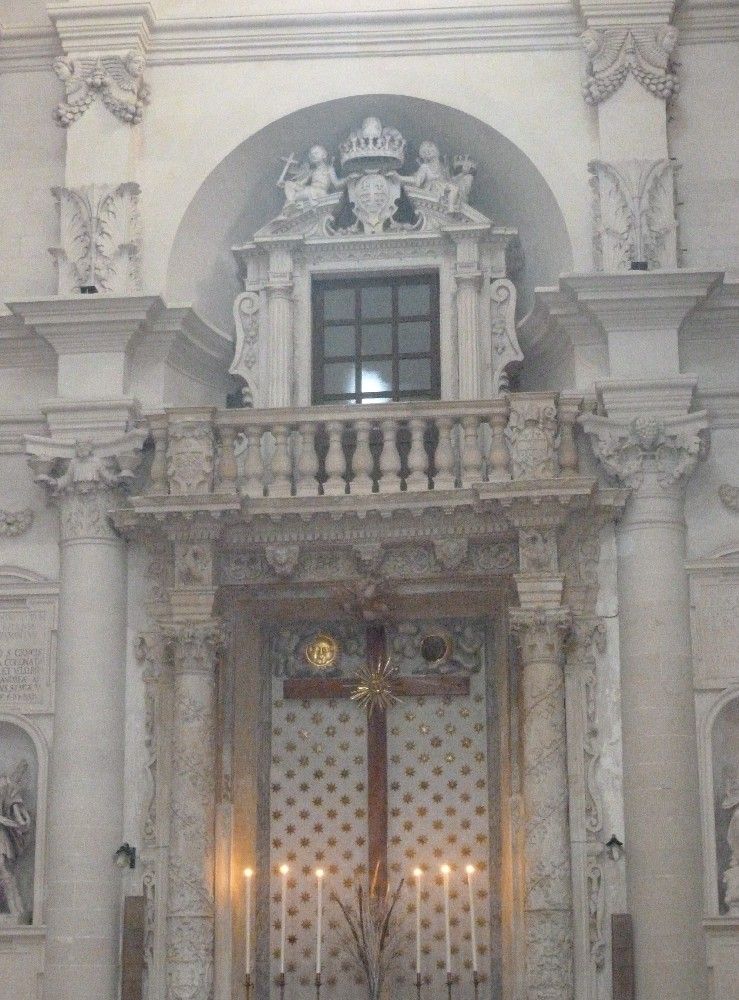
Inside the basilica was this side altar, dedicated to the cross itself, and which includes a balcony:

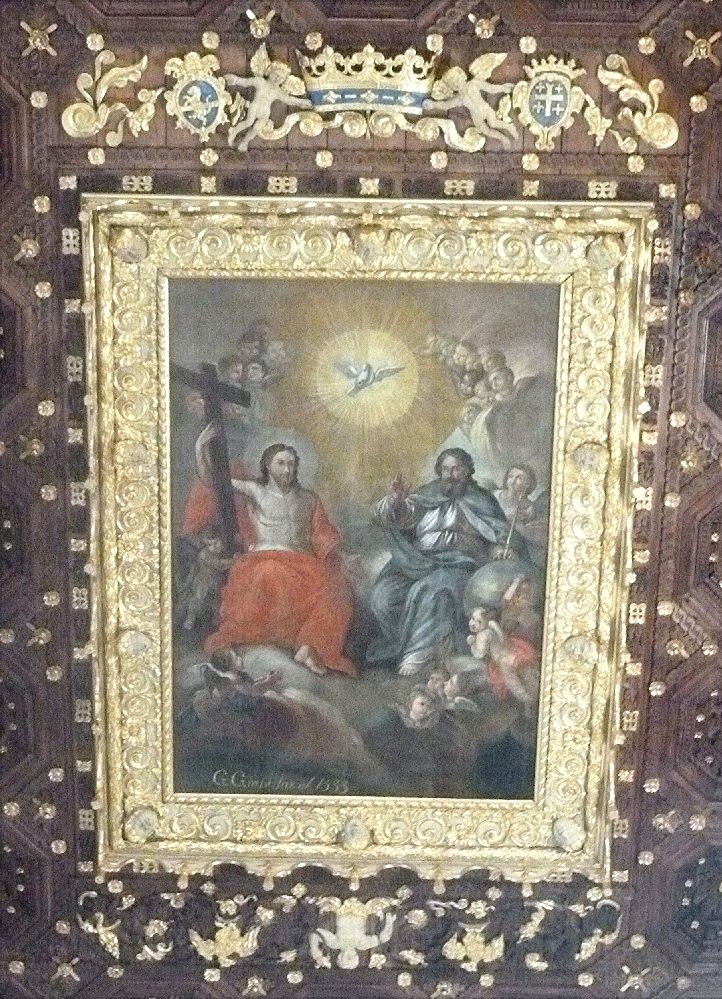
On the ceiling of the basilica was this image:
 I don't know if it's a painting or a tapestry, but the surrounding "frame" appears to be a woodcarving with gold inlay or gold paint. In any event, there's more to come in Part 2.

We entered the main part of the city by going through a triumphal arch.
As we proceeded down a narrow street, a few of us wandered into a small courtyard.
Back on the street, we saw two windows that formed a Moorish balcony. Notice the difference in condition between the two sections of stonework below each respective window.

At a street corner, we saw this Italian terrace:
We proceeded to our first stop in Lecce, the Basilica di Santa Croce (Holy Cross). The very ornate façade was undergoing some renovation, and thus partially blocked by scaffolding. I got this shot of a section of the façade, which shows human and animal figures "supporting" the section above them.
Inside the basilica was this side altar, dedicated to the cross itself, and which includes a balcony:
On the ceiling of the basilica was this image:
Saturday, September 15, 2012
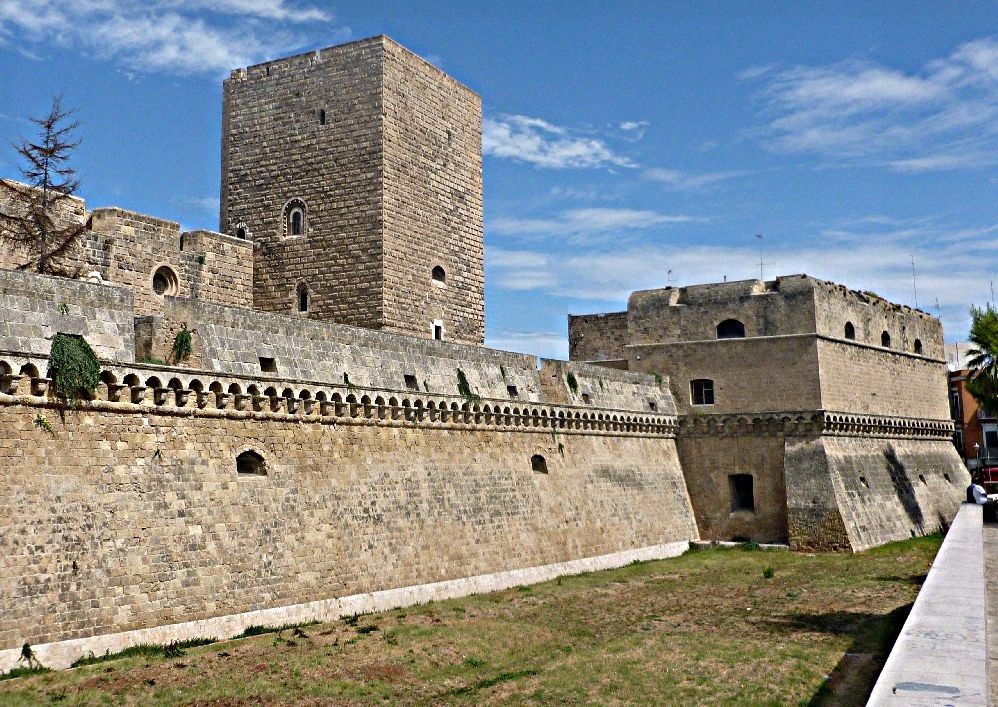
Bari is a seaport in southeastern Italy, and also includes an airport named after Pope John Paul II under his secular name Karol Wojtyła. Polignano a Mare, where my tour group stayed, is about 20 miles to the southeast. We walked past Bari's old castle, of which this is one corner bastion:

One another side of the castle is the entrance, which is reached by walking over a bridge.

Looking further down the wall towards another bastion:


We visited the Basilica of St. Nicholas, which includes his tomb in a lower level chamber, his relics having been brought from Myra in Asia Minor to Bari in 1087. There was a ceremony taking place when we walked through, so I couldn't take any pictures due to the large crowd in the tomb chamber. Back in the main part of the church, I took this shot of a statue of St. Nicholas, with some flash reflection from the glass casing:


One another side of the castle is the entrance, which is reached by walking over a bridge.
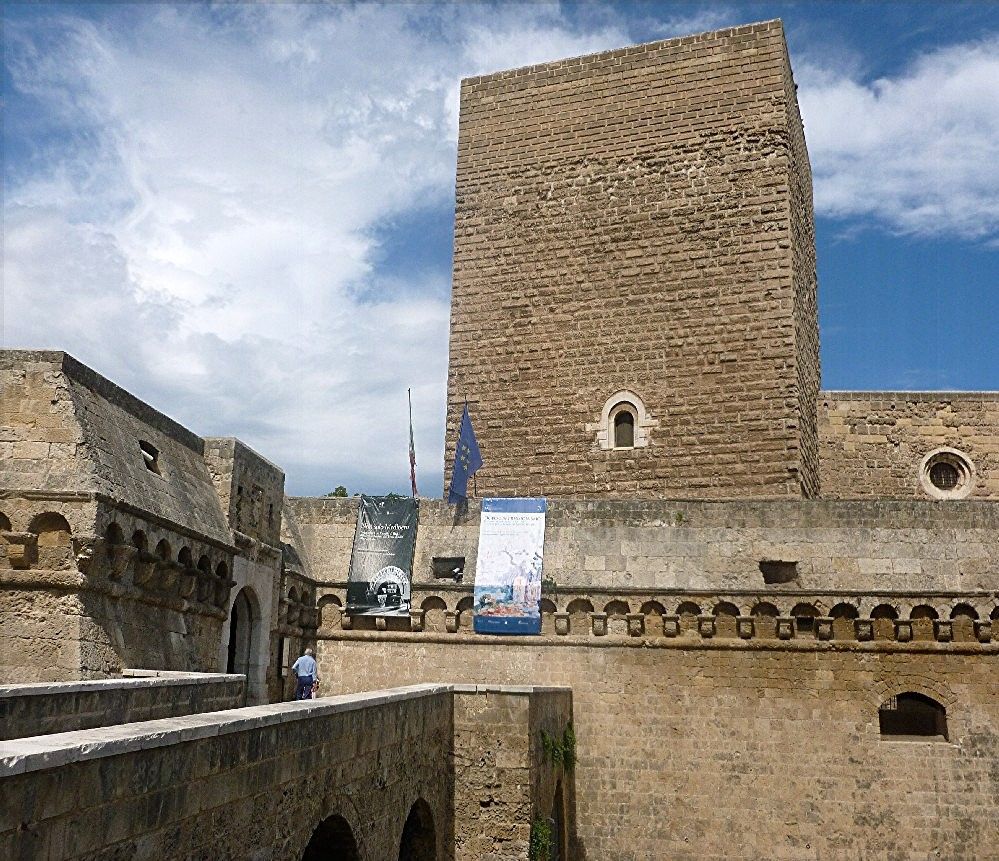
Looking further down the wall towards another bastion:
Some people in Bari make their own pasta to sell to local restaurants. Here are some women in a narrow alley making orecchiette ("little ears") pasta, while being observed by a few tourists: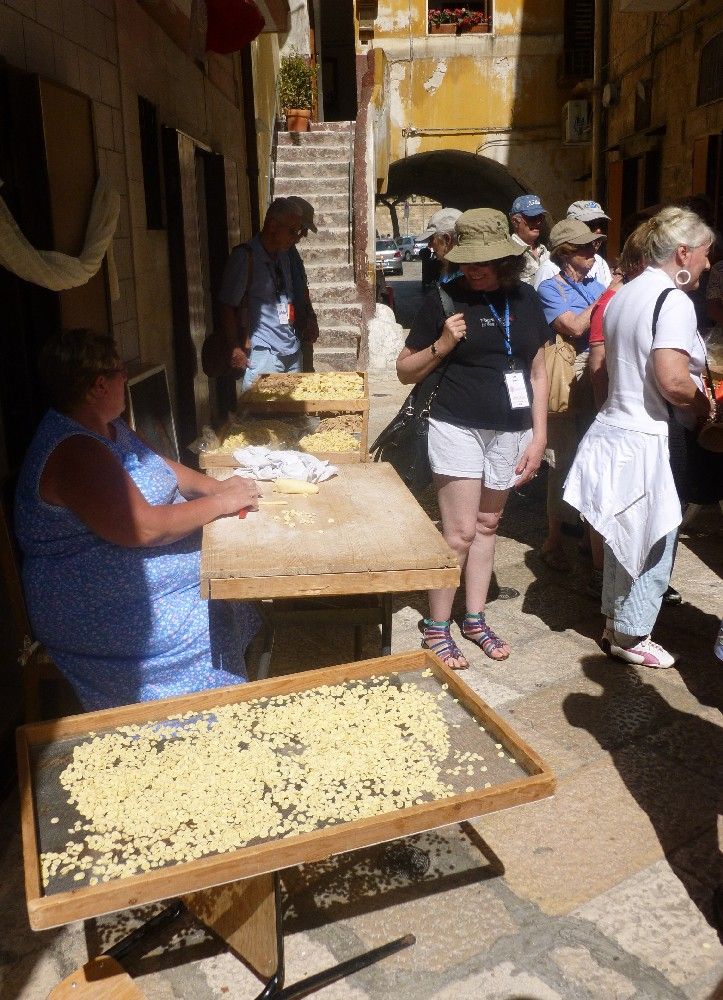
We visited the Basilica of St. Nicholas, which includes his tomb in a lower level chamber, his relics having been brought from Myra in Asia Minor to Bari in 1087. There was a ceremony taking place when we walked through, so I couldn't take any pictures due to the large crowd in the tomb chamber. Back in the main part of the church, I took this shot of a statue of St. Nicholas, with some flash reflection from the glass casing:

Subscribe to:
Posts (Atom)


