Sunday, September 30, 2012

During my recent trip to Italy, the last full day had no scheduled tours, thus being called a "free day".  A good number of us decided to explore the city of Monopoli.  Permitted an educated guess, I would say that the city's name is of Greek origin, probably meaning "one city" (like "Tripoli" means "three cities"), and shouldn't be confused with "monopoly".  Monopoli is so close to Polignano a Mare that a train ride between them lasts about 5 minutes.  It was my first train ride in Italy since 2004, when I travelled between Orvieto and Rome.

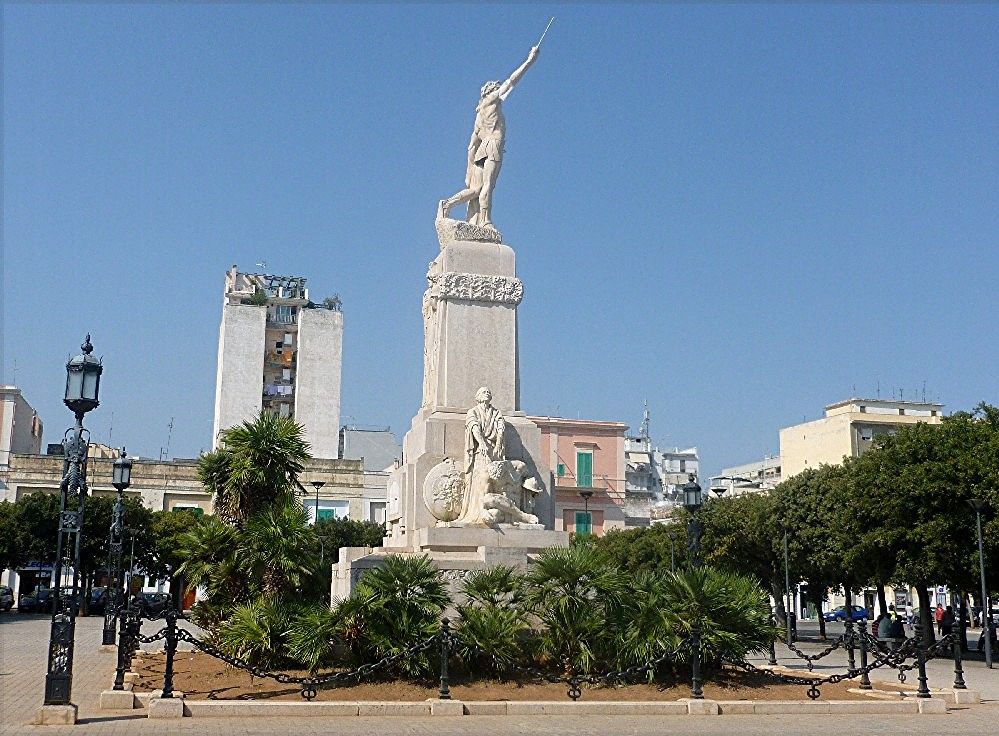
Within the city's main square, the Curso Umberto, is this statue:
I wandered into the old section of Monopoli, and found this church towering over the neighboring buildings:

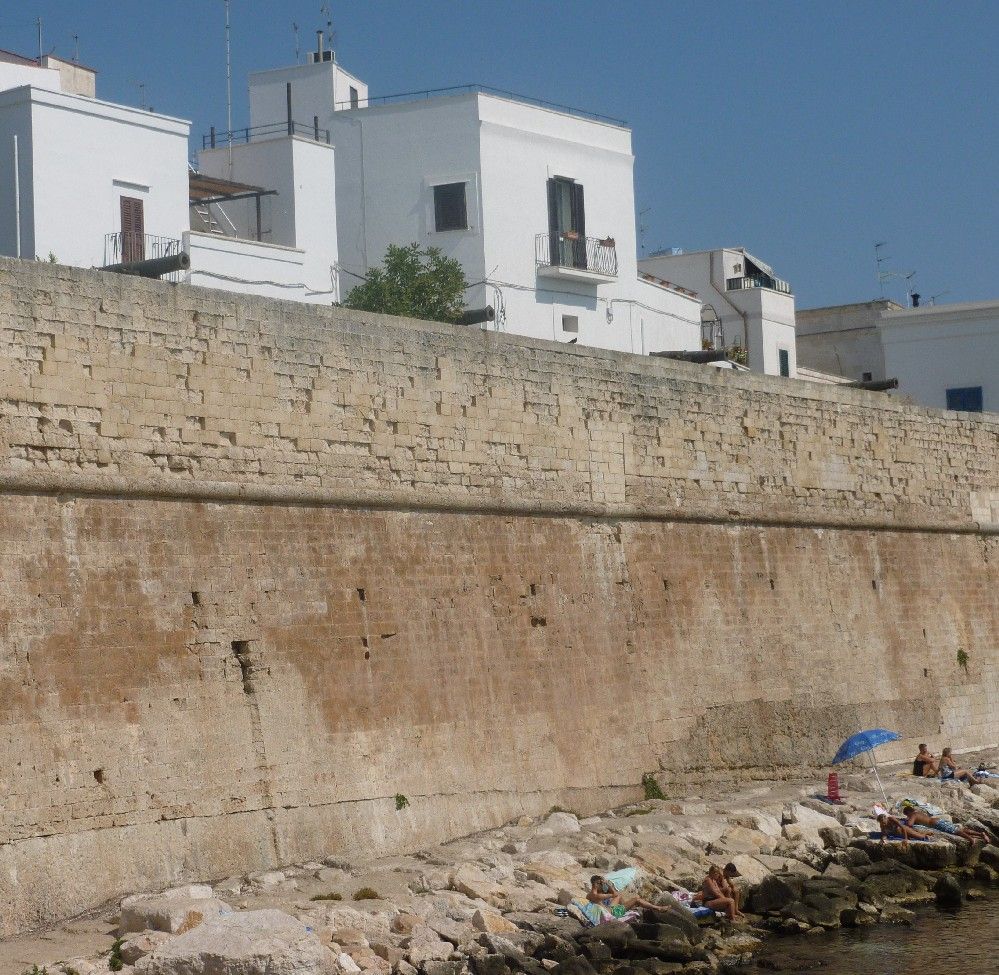
I found my way through the old section down to the beach, where the locals were hanging out.  Much of the beach was rocks in front of the seaside city walls.

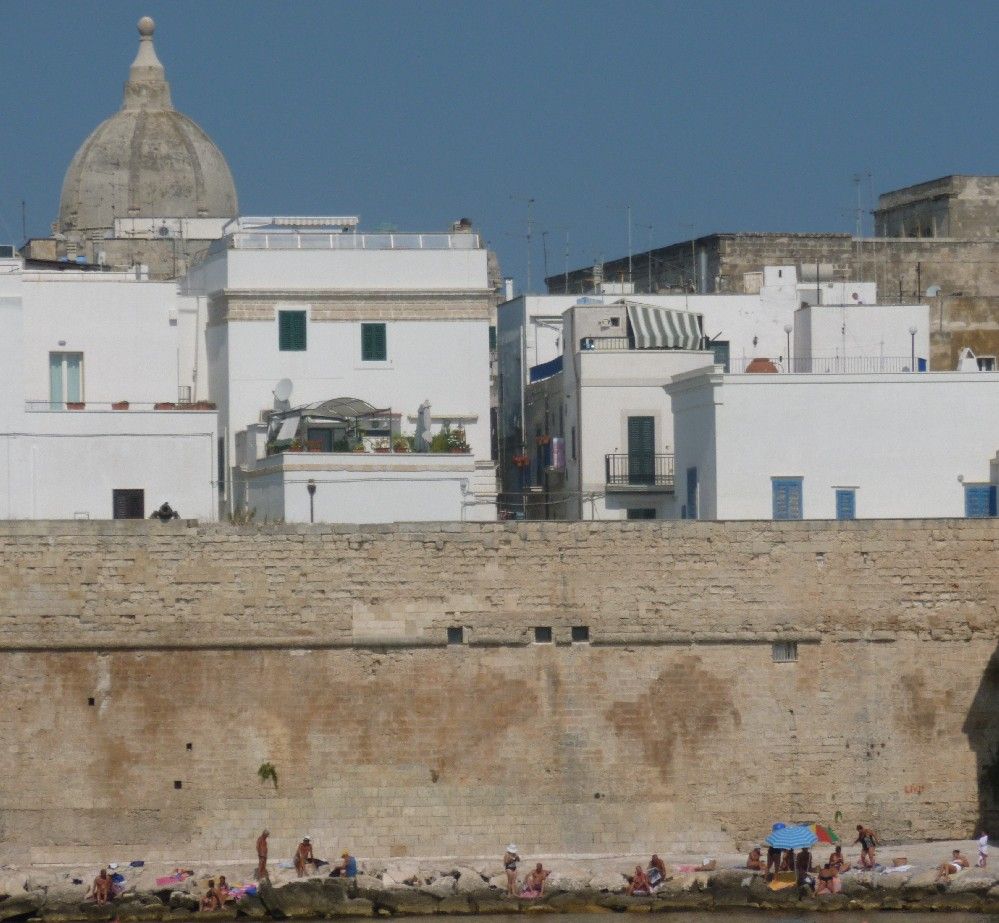
Here's a view from a different angle, with the dome of another church in the background:

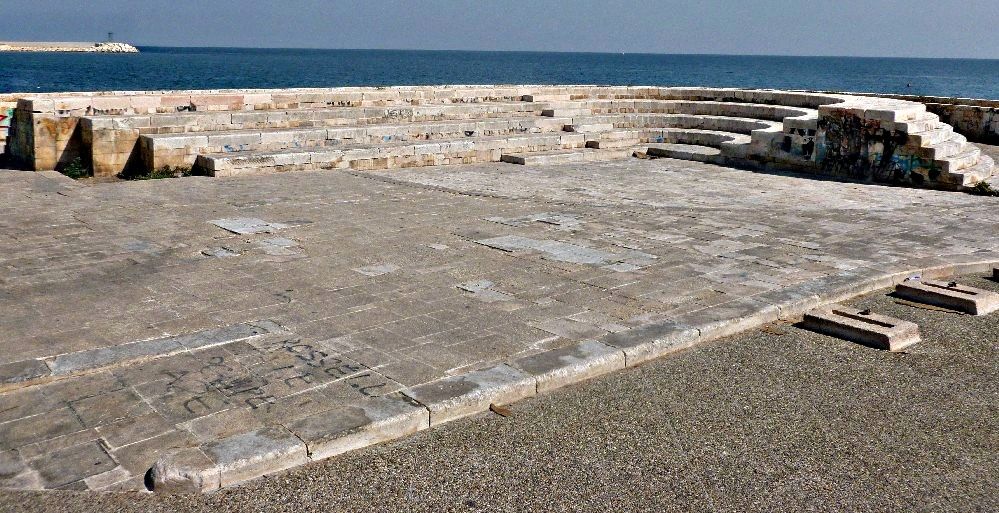
Further down the road above the beach were these steps, formed in the shape of the letter J:

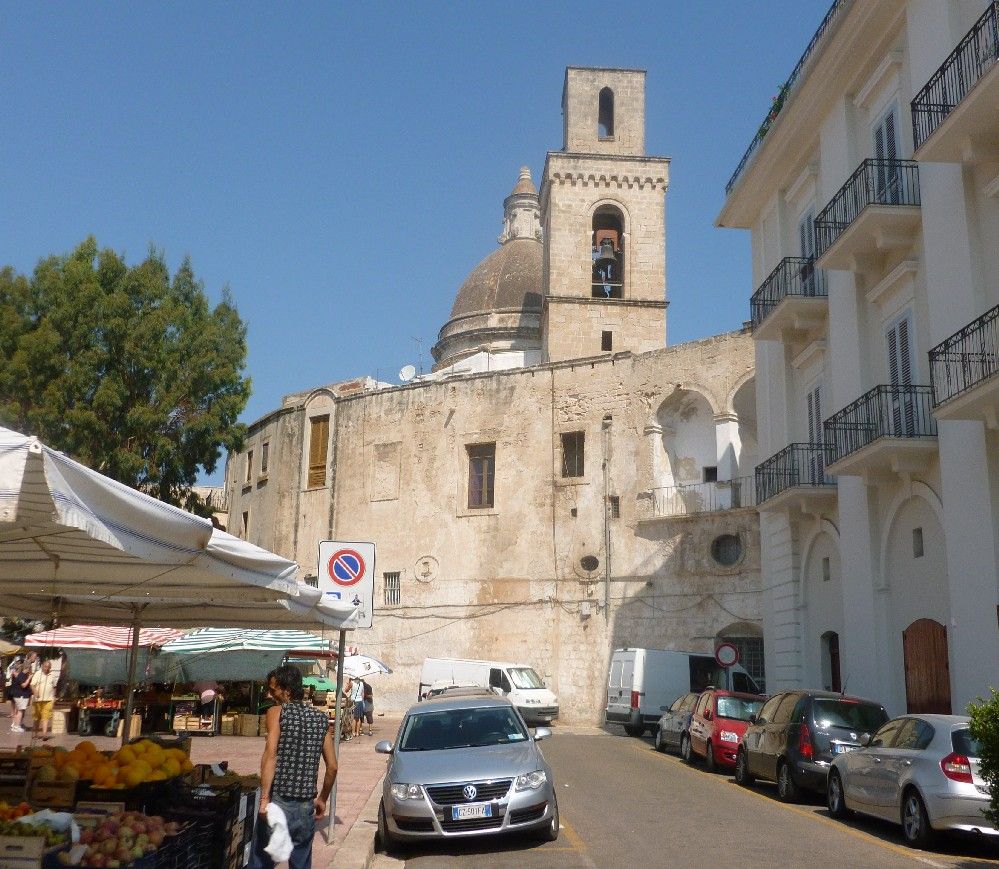
After going back through the old section, I found yet another church, next to a produce market.

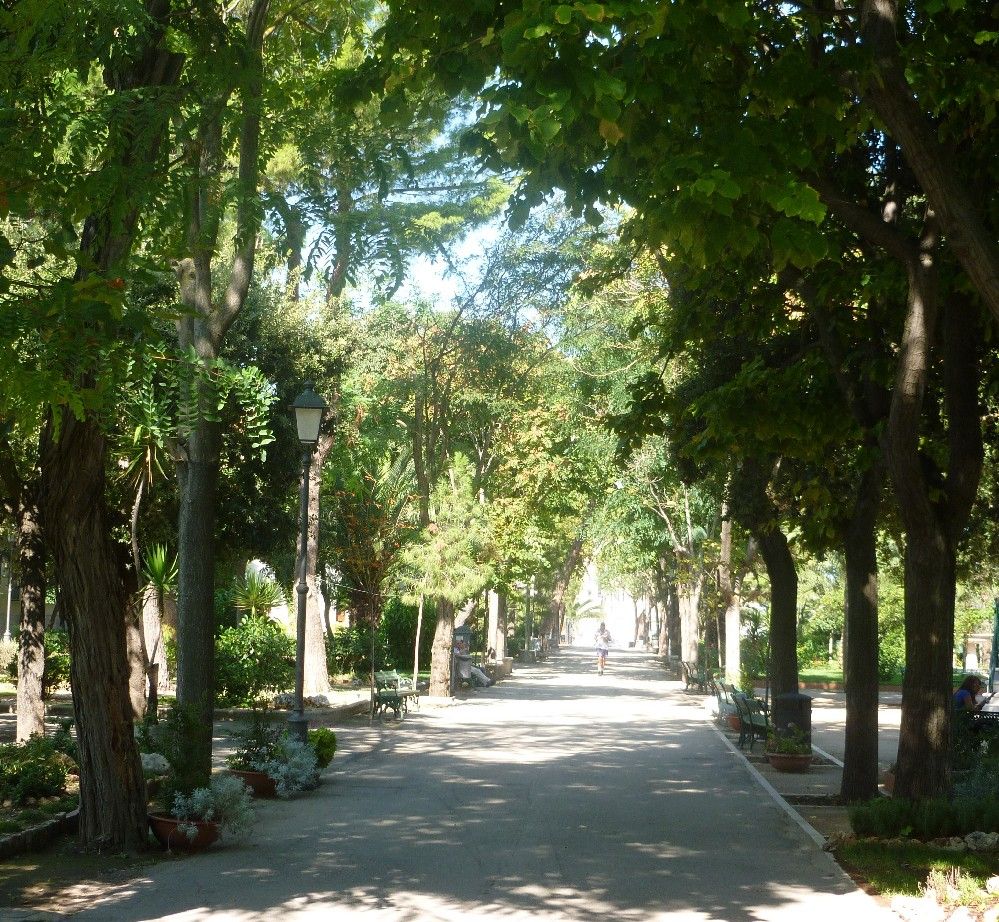
My favorite part of Monopoli was a park not far from the Curso Umberto.  They certainly have some gorgeous trees over there.

The park included this fountain, made with octopus figures:

Thus ends my Italian pictorial travelogue.  Any odds and ends from the trip will be posted later.

Thursday, September 27, 2012

The Mars rover Curiosity has turned up something that is indeed curious.  Scientists studying images of "stones cemented into conglomerate rock" have opined that the formation is evidence of a stream flowing at about 3 feet per second.  The estimate of the stream's depth ranges "somewhere between ankle and hip deep", according to Curiosity science co-investigator William Dietrich, of UC Berkeley.  A rock outcrop near the stream bed has been named Hottah, after Hottah Lake in Canada's Northwest Territories.

For the full story, go here and here.

Tuesday, September 25, 2012

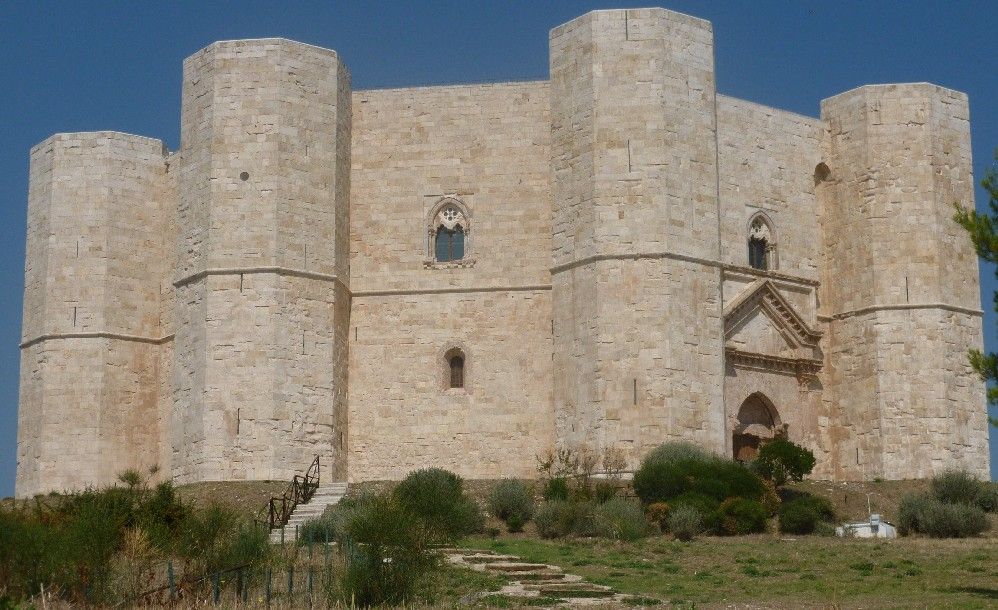
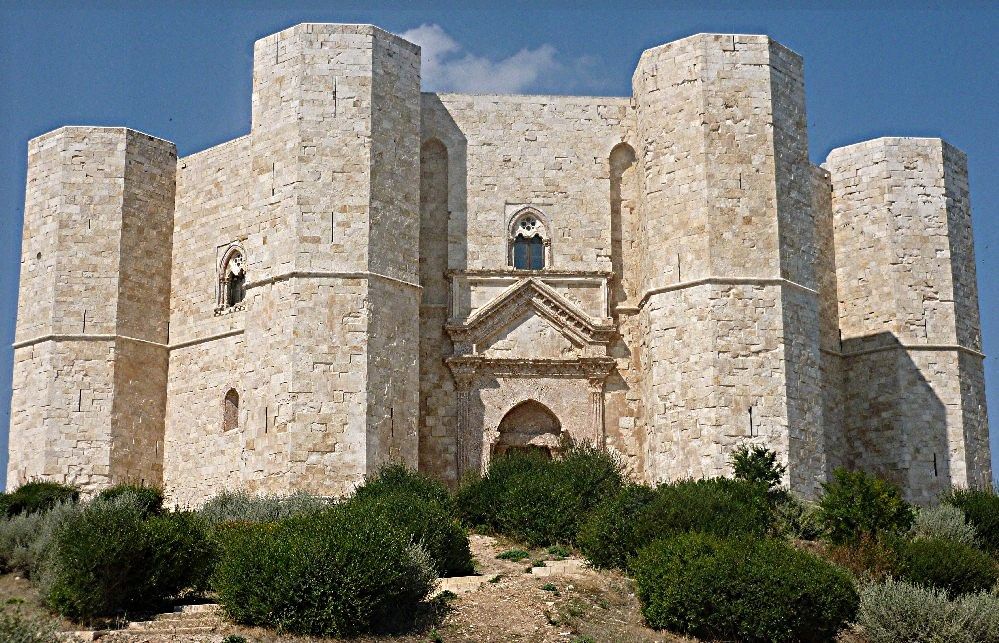
Castel del Monte is an octagonal castle built near Andria, Italy in the 13th century by the Holy Roman emperor Frederick II.  Thought to be originally built as a hunting lodge, it was later used as a theater and a prison.  It is located to the west of Bari and Polignano a Mare.

We had to get off our tour bus and ride a shuttle bus to get close to the castle, leaving us a short walk.  Here's our tour guide Daniela, with the castle behind her.

Here's view of the castle, trying to get as much of the sunlit part as possible into the picture:

Further up the walkway, a shot centered on the front entrance:

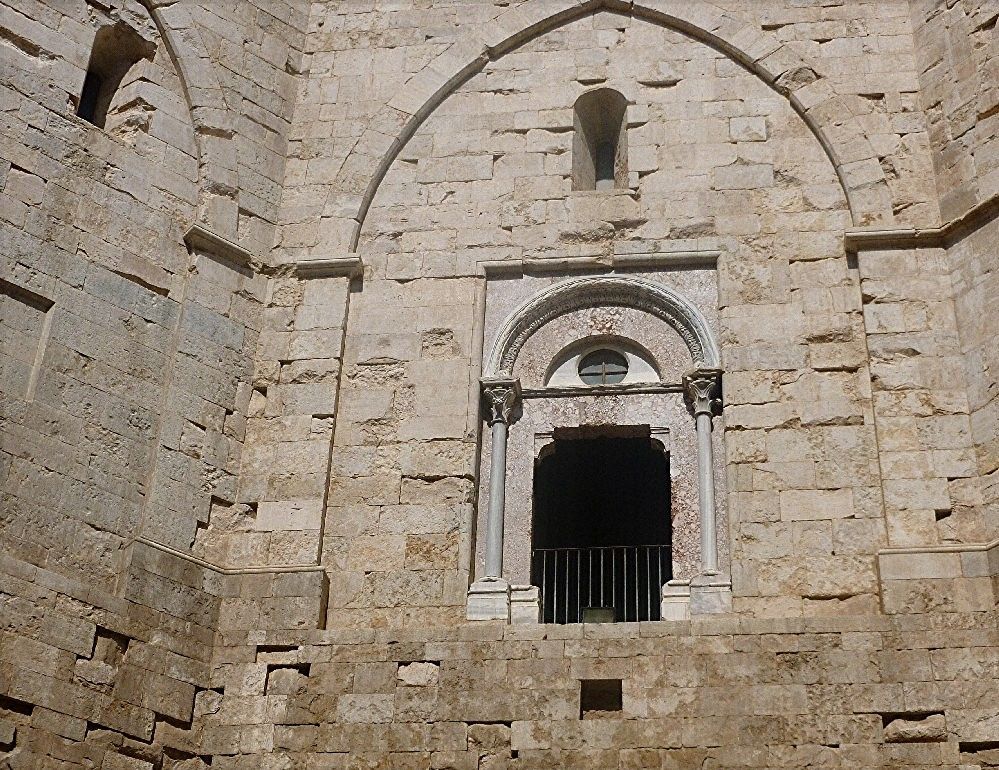
Not only is the outer perimeter based on an octagon, but there is also an inner octagonal courtyard.  Here are part of its walls:

After visiting the castle, we went to a local winery for winetasting, lunch and a brief tour.  Here's part of the reception area:

Monday, September 24, 2012

A few stories recently in the news:

From the Daily Caller, members of the Occupy movement protest the president - of Iran.

World Net Daily has found a video of Obama from 1995, in which he talks about "common ground".

From the American Thinker, the Obama campaign has quietly discontinued their sales of the "Obama flag".

From the Washington Times, the Obama administration has released a list of 55 terrorists, er, uh, detainees who have been approved for release from Guantanamo.

From WXYZ Action News, the owners of three stores in Dearborn(istan), Michigan have been arrested for alleged fraud against the Bridge Card Program, which is part of the Food Stamps system.

From ABC News, Polish soldiers in Afghanistan found a newborn baby girl abandoned on the side of a road. Niech żyje Polska!

From Big Government, Mr. Bill implies that if there's a second Obama term, Hillary won't be part of it.

From Big Journalism, one of Hillary's aids, during an interview with a CNN reporter, slips into some foul language.

From the Telegraph (and the PC department), France is not only preparing to legalize gay marriage, but also to eliminate the words "mother" and "father" from official documents.

From The Hill, several prominent Democrats warn Israeli Prime Minister Netanyahu to stay out of the US presidential election.

From Yid With Lid, several other Democrats, on the other hand, warn "Don't trust Obama on Israel."

From Occupy Corporatism, FEMA has created a civilian group intended to assist the federal government in future disaster preparedness.

And finally, from the Norwalk Reflector, a potential Darwin Award nominee: a stop sign thief runs a stop sign, thus making his last mistake.

Saturday, September 22, 2012

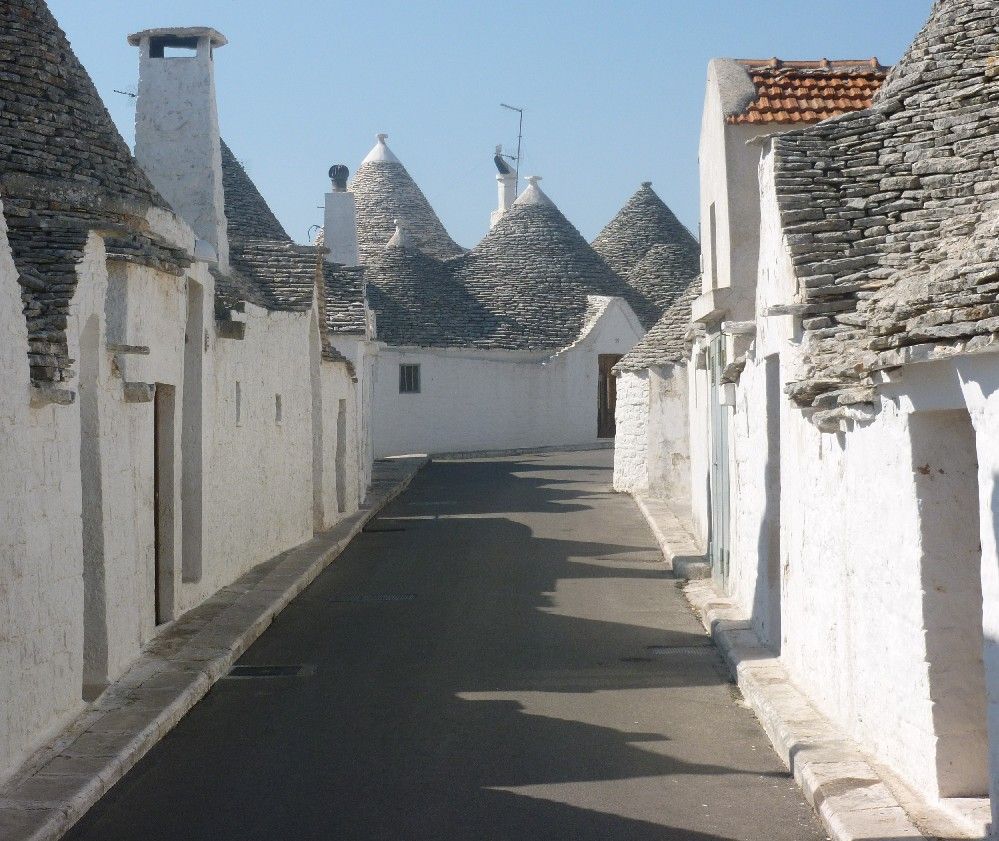
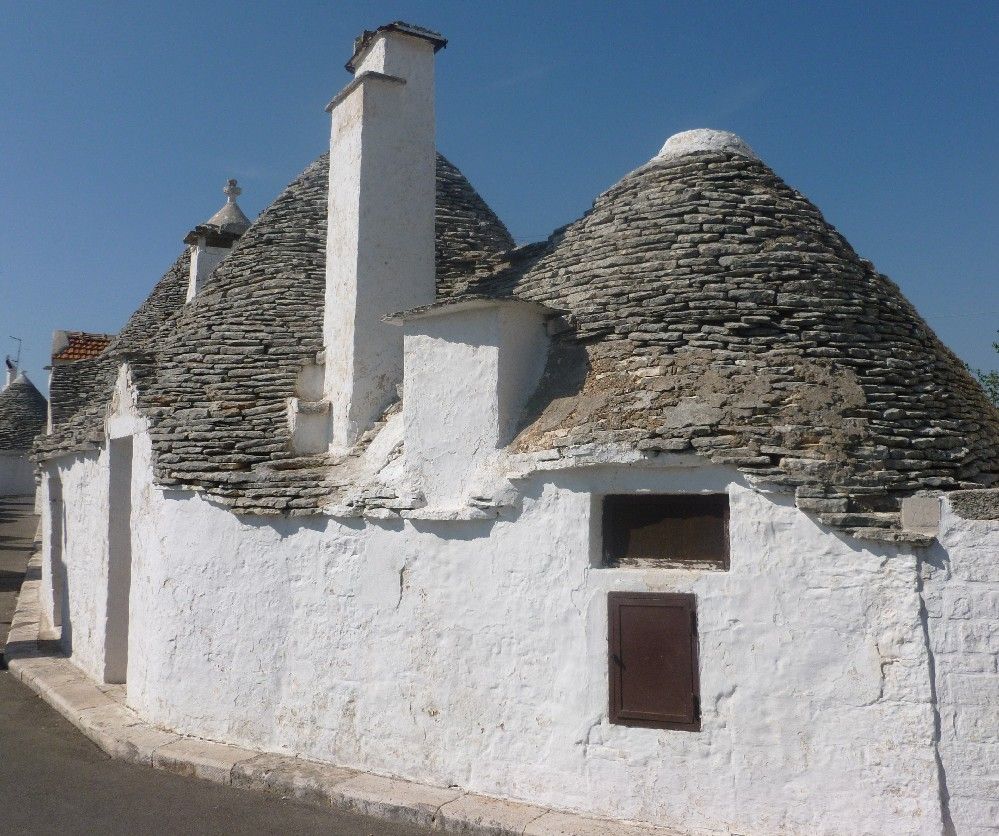
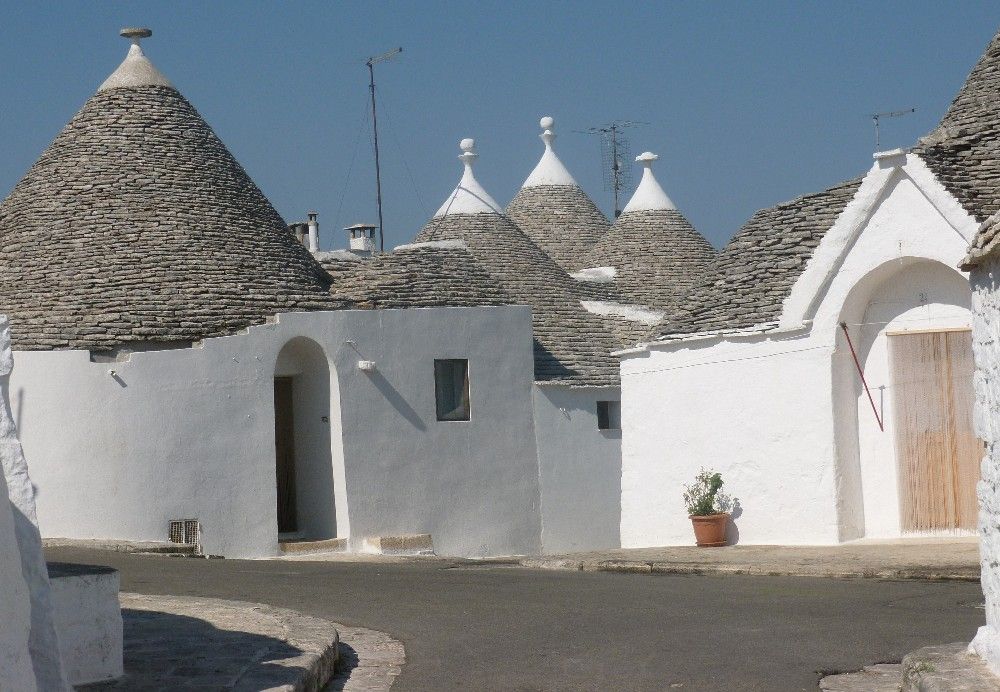
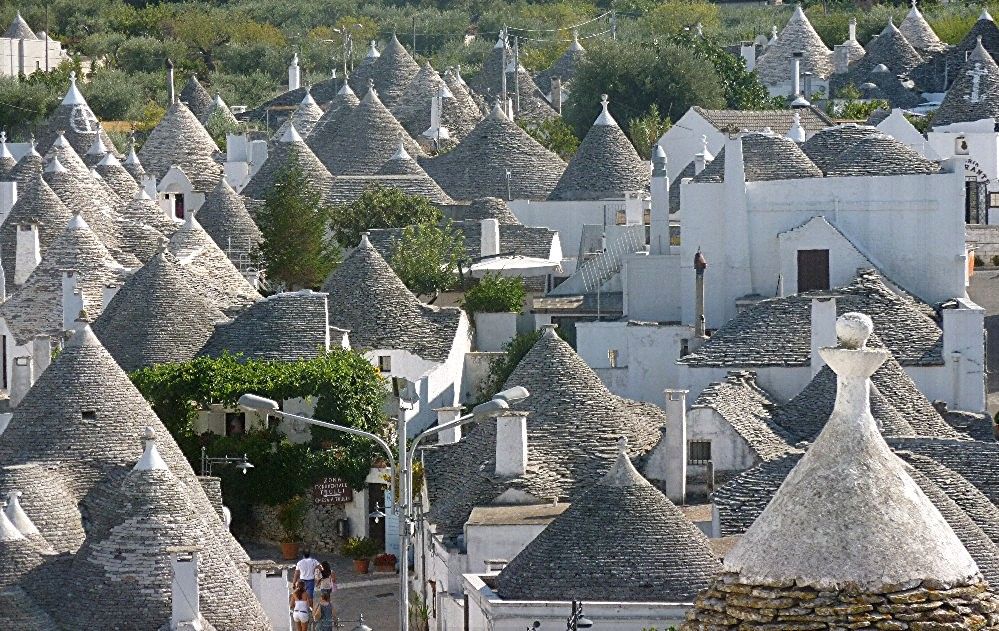
On the way back from Matera to the Adriatic coast is Alberobello, a town that features numerous inhabited trulli.  The trullo type of stone house was constructed without mortar or concrete, due to the taxes laid on these materials, and could be easily torn down if the powers that be didn't want anyone building any houses without their permission.  Trulli were often constructed in agricultural fields as temporary homes for workers, who would inhabit one for a period of time before moving on to another worksite, and thus to a different trullo.  A typical trullo was a single circular building with a conical roof.  From the inside, the roof would resemble a Greek beehive tomb.  In Alberobello, houses (and business establishments such as stores and restaurants) often include several trullo units.

Today, you can rent a modern trullo.  For information, go here, here and here.

Here's a street in Alberobello, with trulli on both sides:

Here's a house made of at least two trullo units:

A trullo with an arched doorway:

Two trulli, with several others behind them:

From an overlook, a whole bunch of trulli:

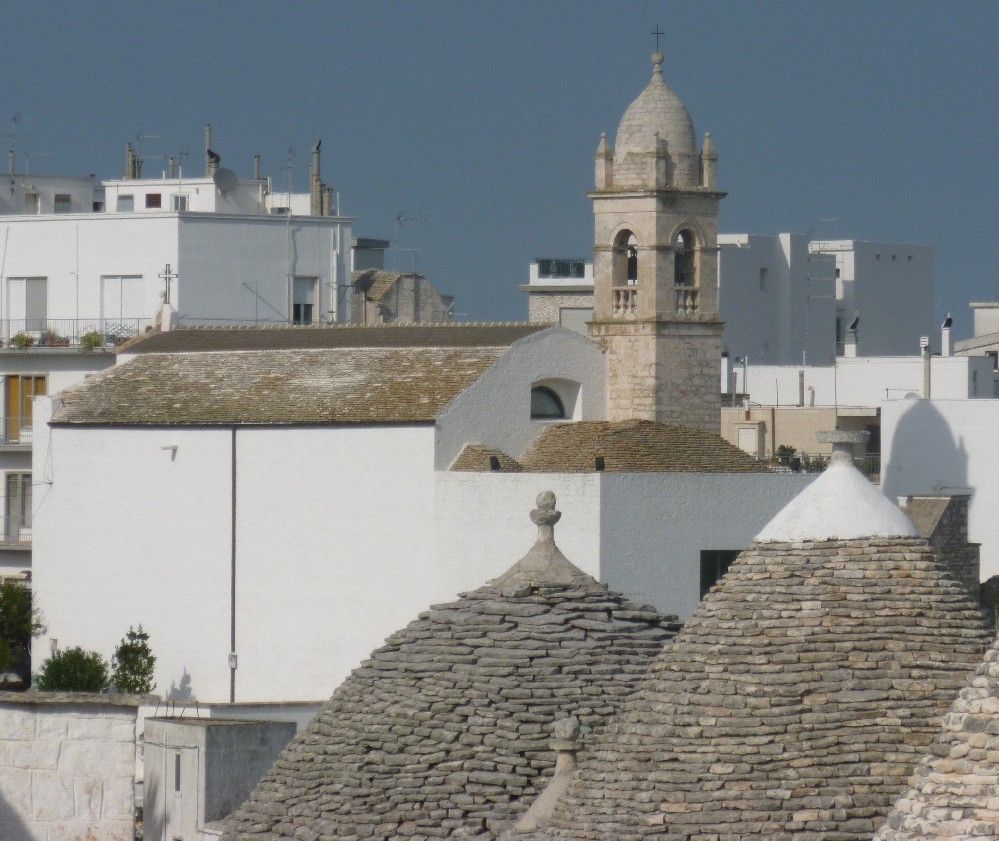
And finally, a church behind some trulli:

To the uninformed, the name Alberobello appears to mean "beautiful tree", but it does not.  While albero is Italian for "tree", bello in this case does not mean "beautiful", but is instead derived from the Latin word bellum, meaning "war".  The name thus means "tree of war" or maybe "forest of war".  For more on Alberobello and its trulli, go here and here.
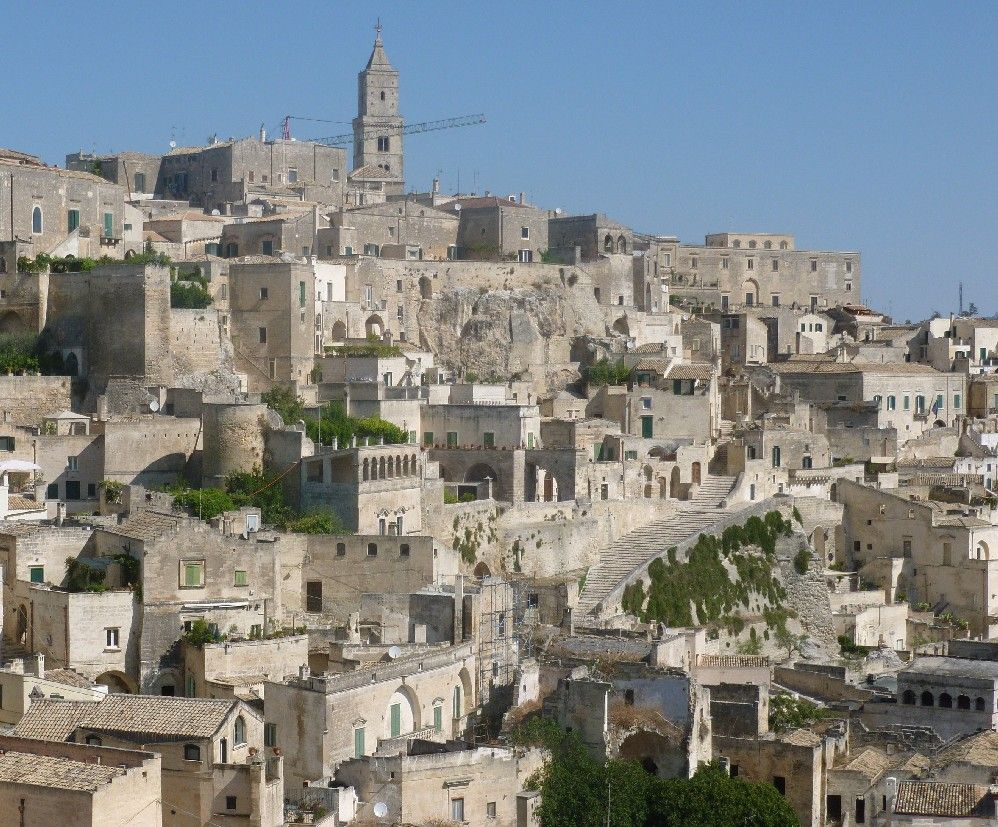
Matera is the only place we visited outside of Apulia/Puglia.  Located south of Bari and Polignano in the region of Basilicata, Matera sits on the side of a canyon and features centuries-old cave dwellings and stone houses called sassi (which means "stones").  In recent years, it became the location for much of the filming of Mel Gibson's movie The Passion Of The Christ.  Matera also includes other attractions such as a cathedral and Rupestrian churches.

Here's a view of Matera, sloping down from the city center:

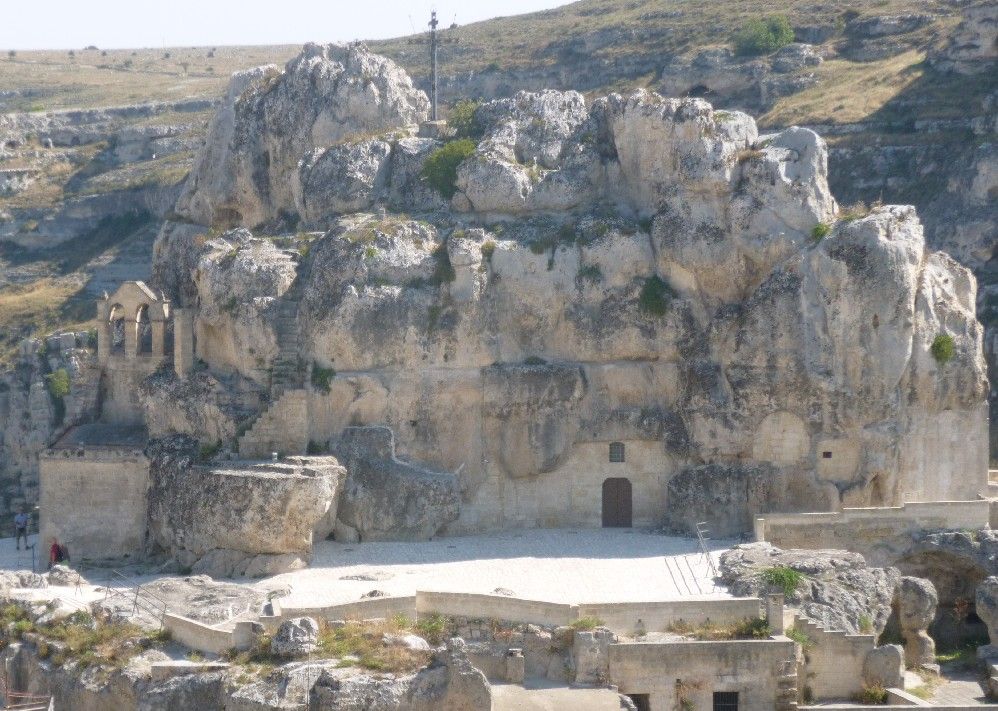
This large rock can be seen from an overlook in the city center:

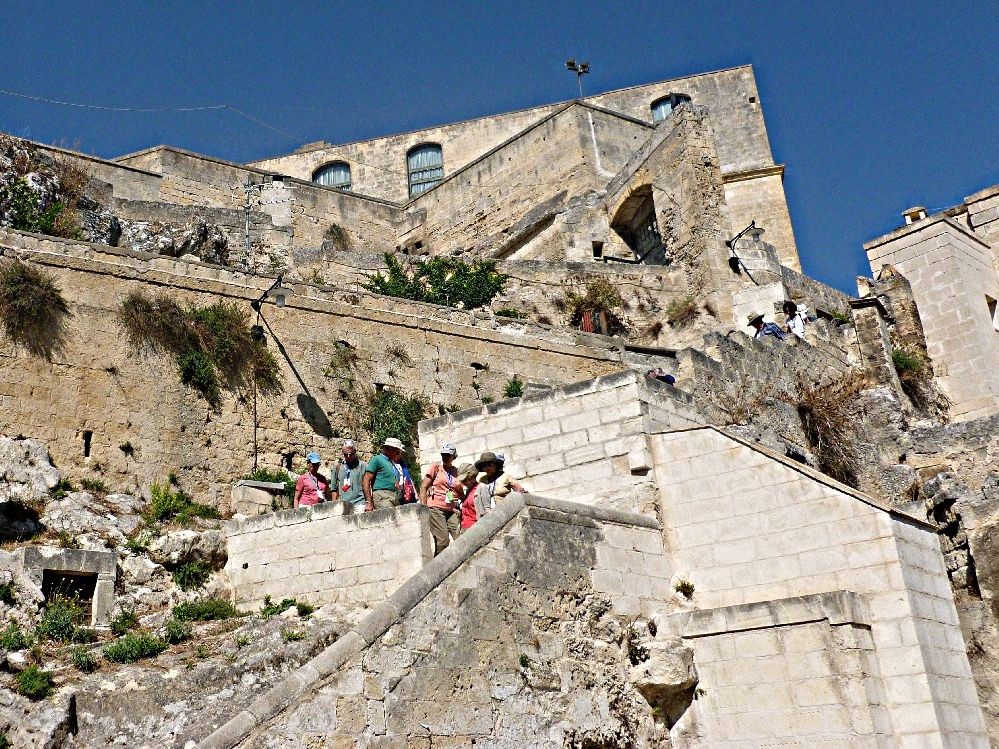
Tourists making their way down some stairs, going from the city center to the cave dwellings:

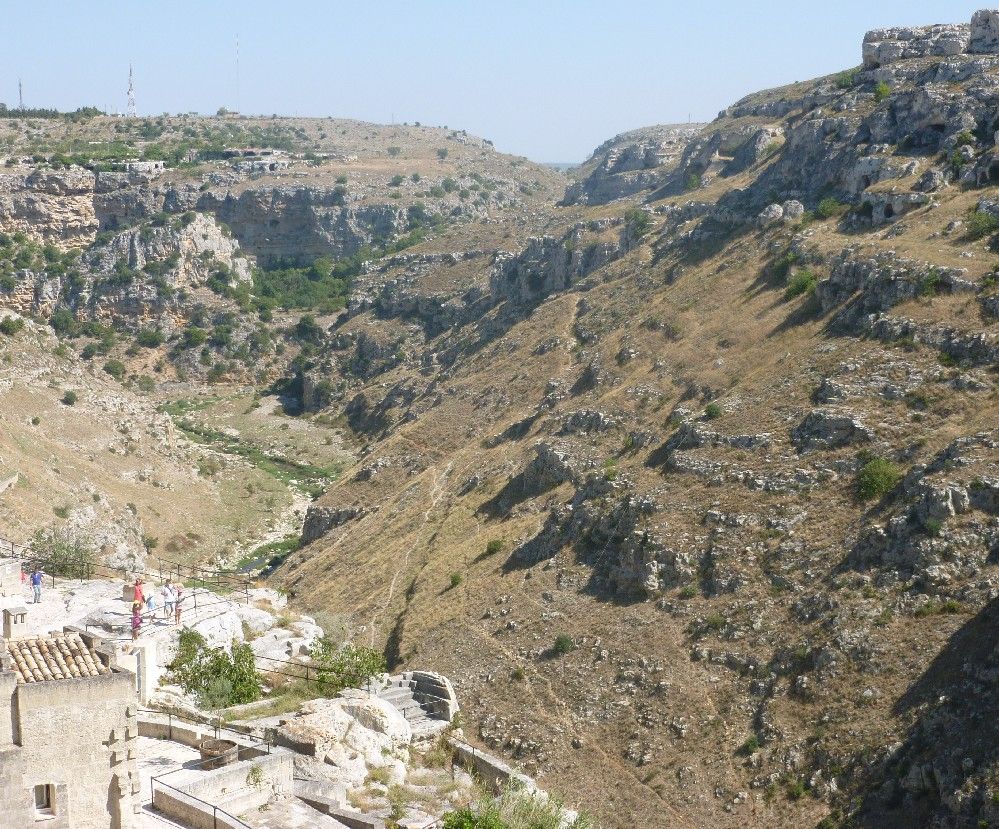
One view of the canyon:

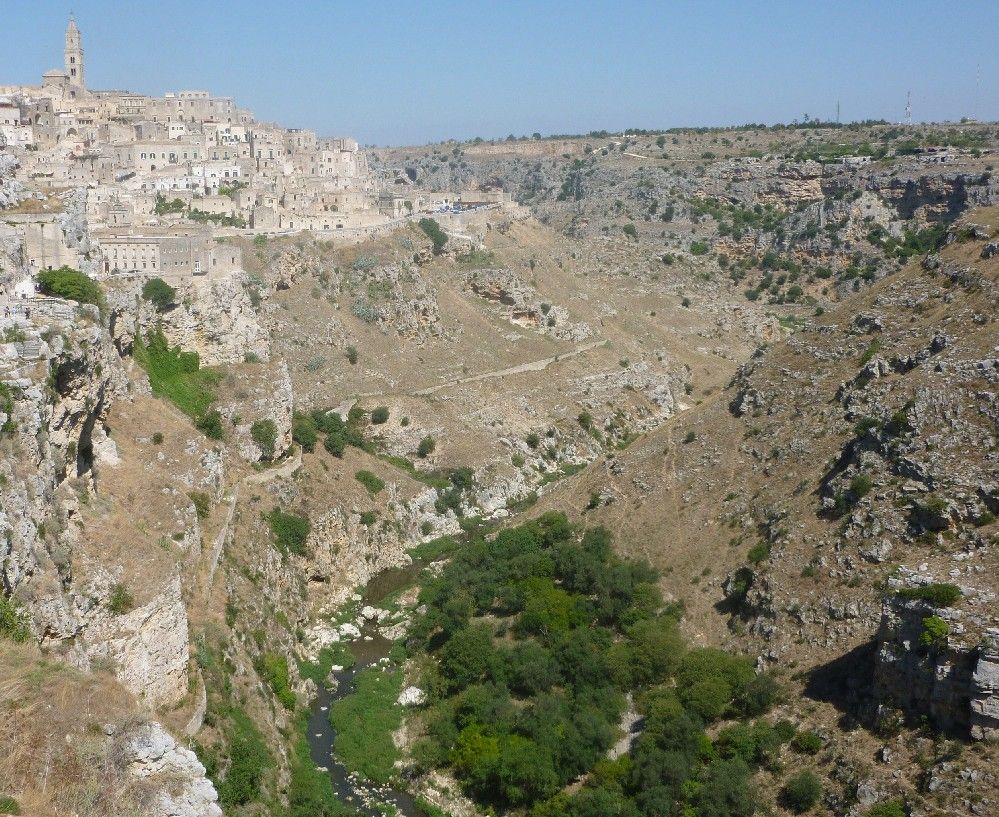
More of the canyon, with the city center in the distance:

Thursday, September 20, 2012

The city of Trani was the northwesternmost place visited during my recent vacation in Italy.  To reach Trani, we had to drive past Bari and then go on for about another 20 miles.  A longtime fishing port, Trani includes a harbor with a marina, and a large public garden known as the Villa Comunale.


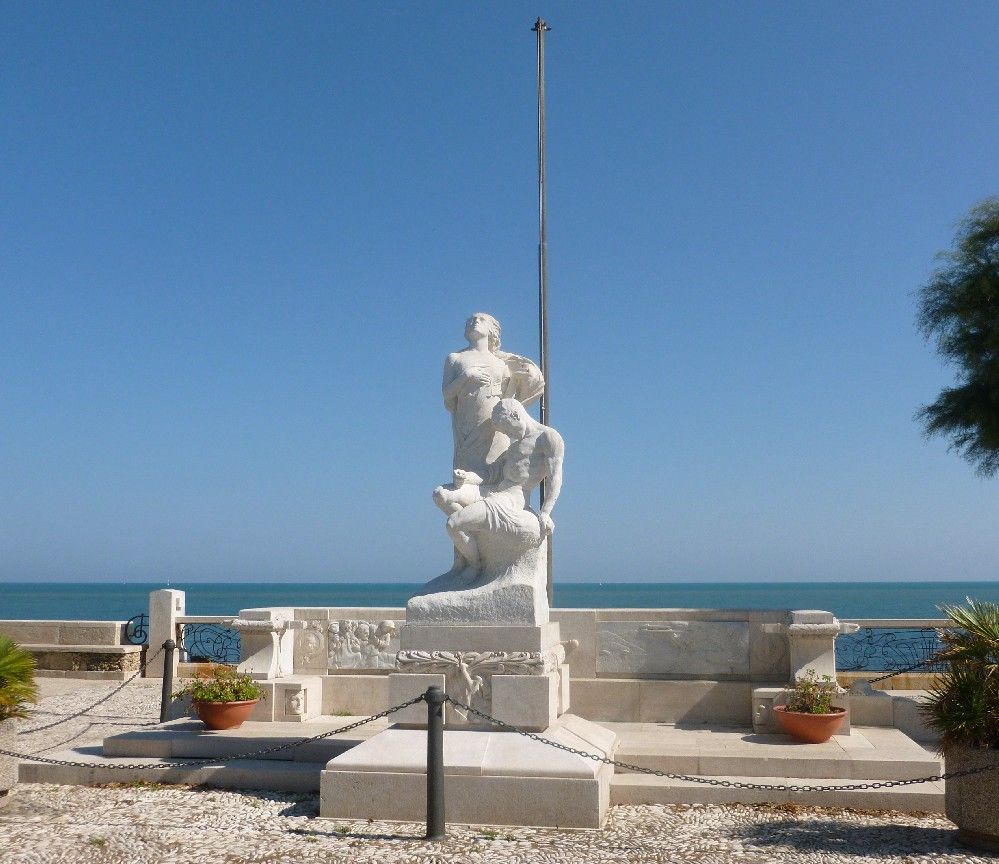
The garden includes this memorial to military personnel who died in WWI:

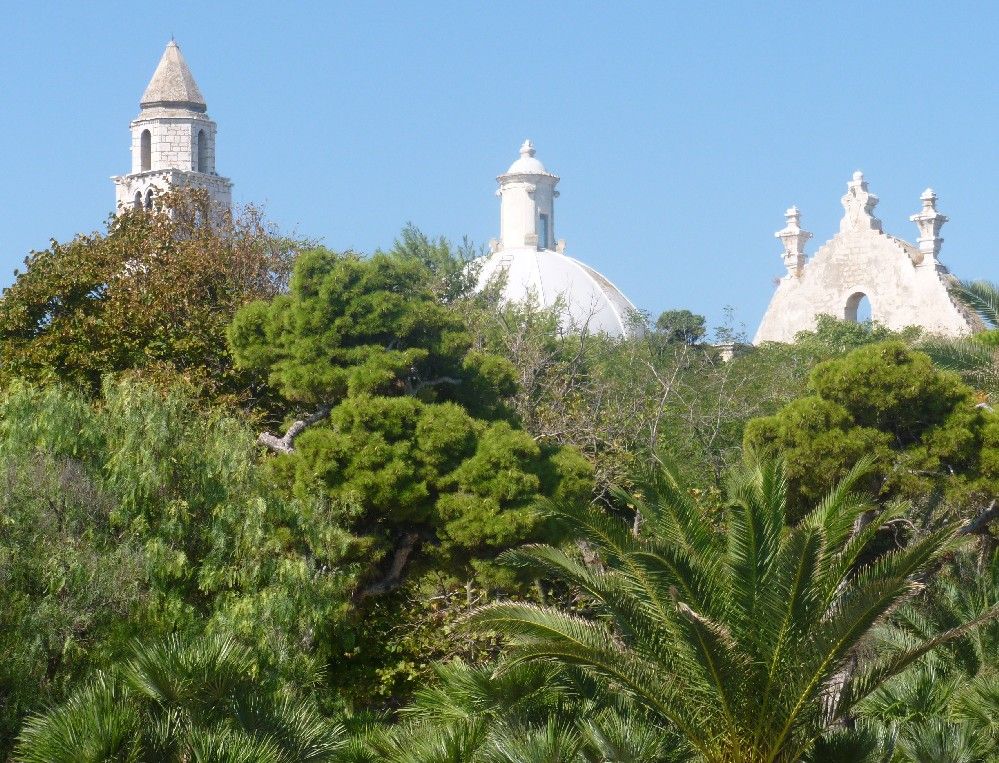
Looming over the tops some trees were the top parts of a church.

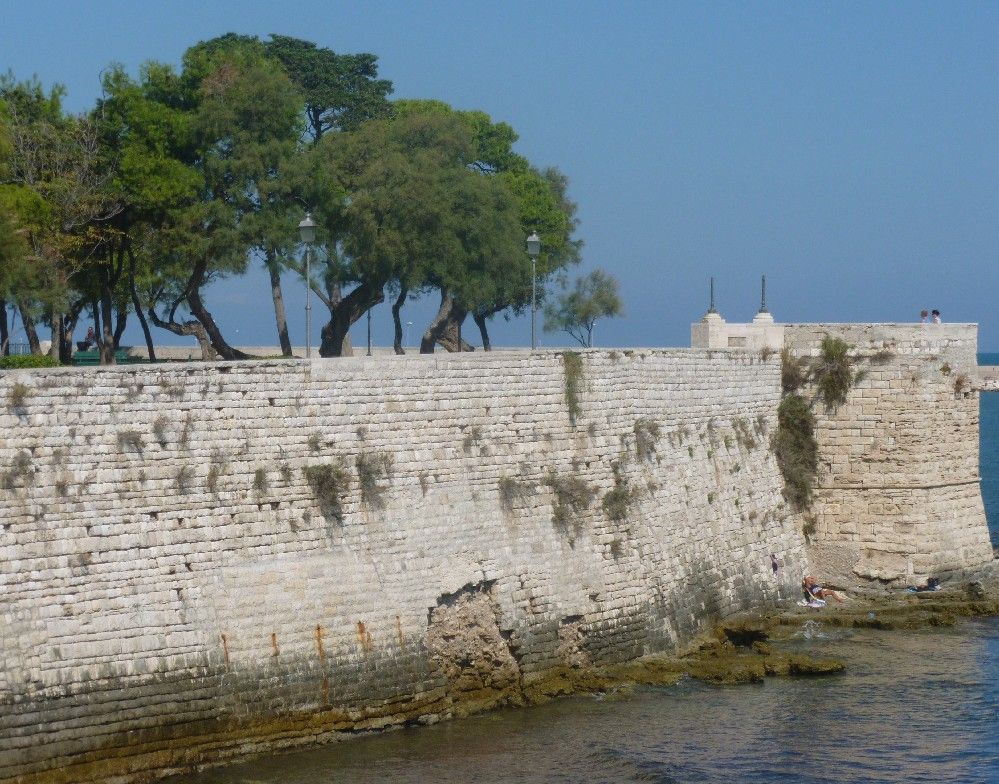
The garden is located just above the sea.  Here's part of the seawall:

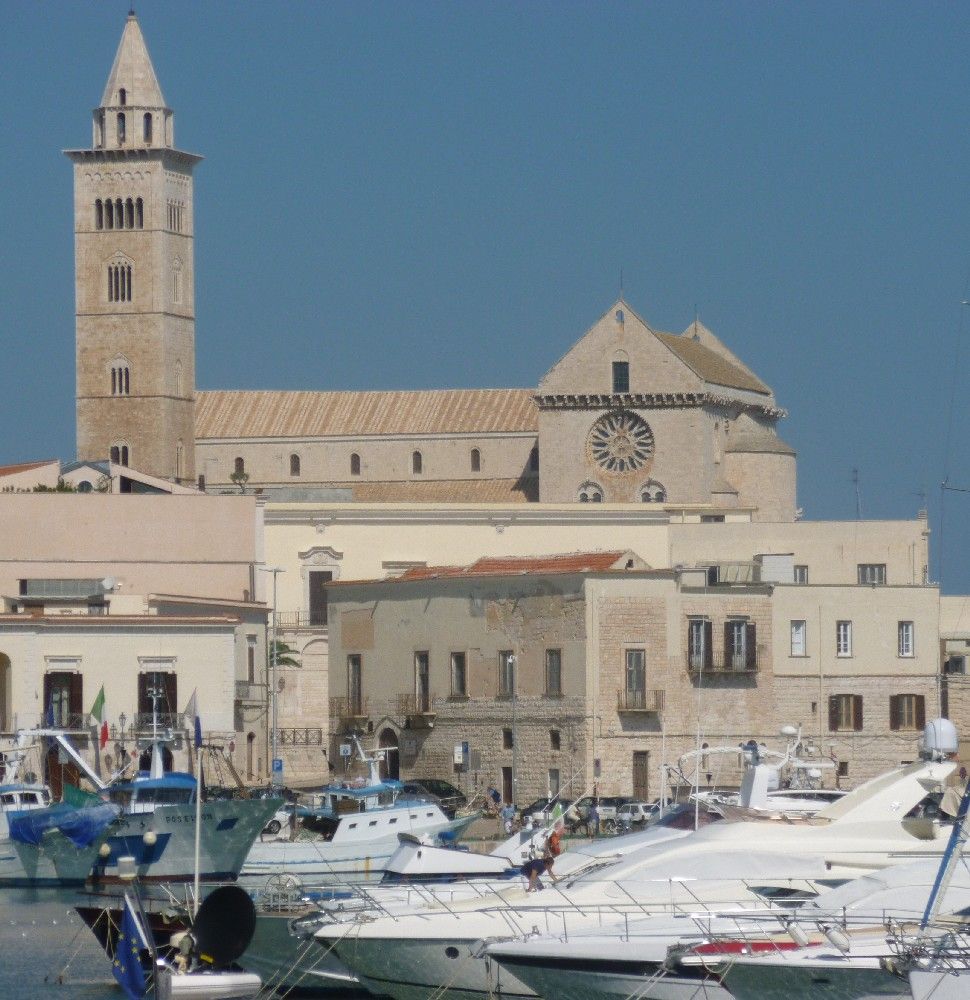
As we walked around the harbor and the marina, we could see the Cattedrale di San Nicola Pellegrino, or Cathedral of Saint Nicholas the Pilgrim, who is not the same person as the Saint Nicholas honored in Bari.

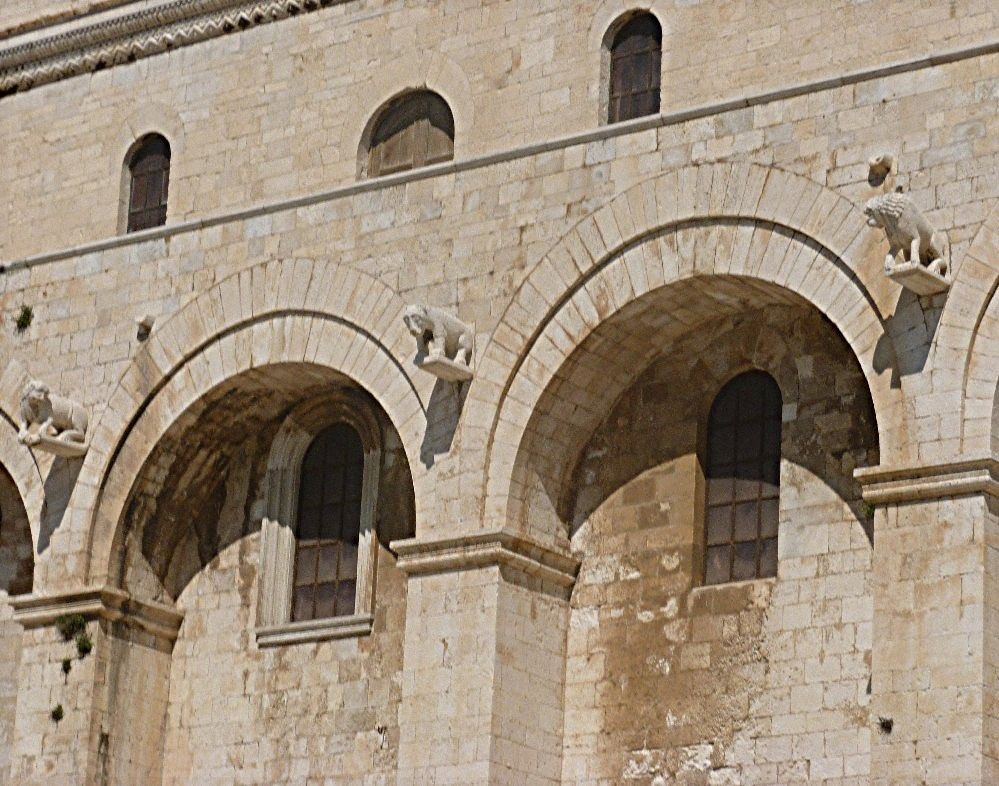
The cattedrale is built mainly in the Romanesque style, which is less ornate than the Baroque style that came later.  The lower chamber includes some wall frescos that may date to the sixth century.  Here is some detail on an outer wall:

A short walk from the cattedrale is the Jewish section of town.  During the Middle Ages, the Jews in Bari were not walled into a ghetto, as was done in many other places, but were allowed to move about freely.

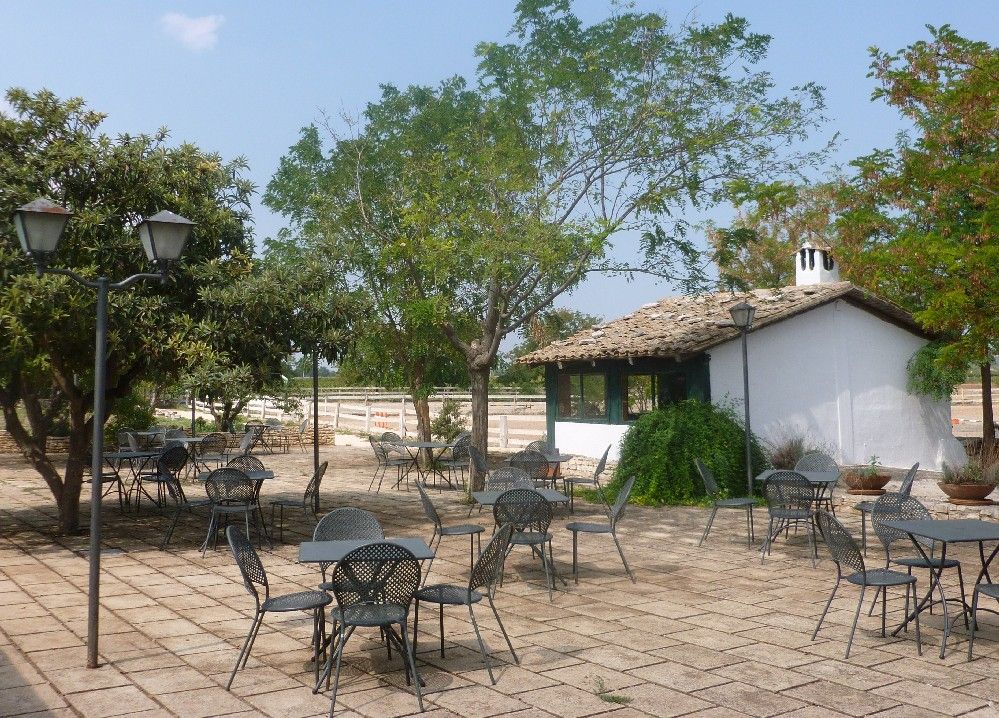
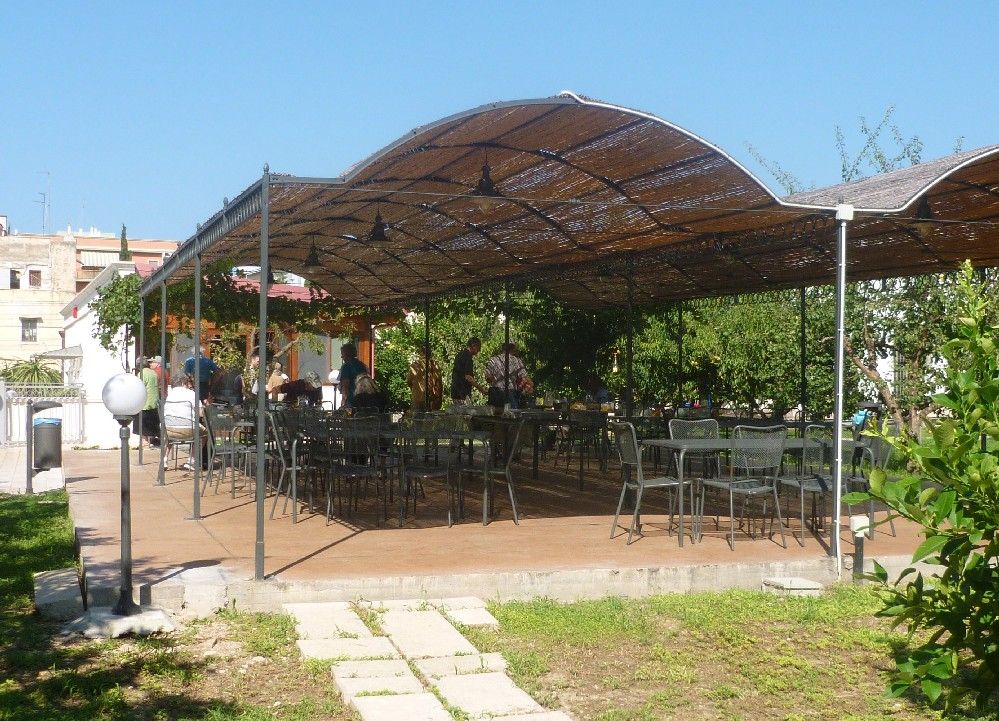
After seeing the sights of Trani, we visited the nearby Galantino olive oil factory, where we were given a tour of the facility and then served lunch on their patio:
Big Foots Place BlogThe owner of this website is a participant in the Amazon Services LLC Associates Program, an affiliate advertising program designed to provide a means for sites to earn advertising fees by advertising and linking to Amazon properties including, but not limited to, amazon.com, endless.com, myhabit.com, smallparts.com, or amazonwireless.com.